
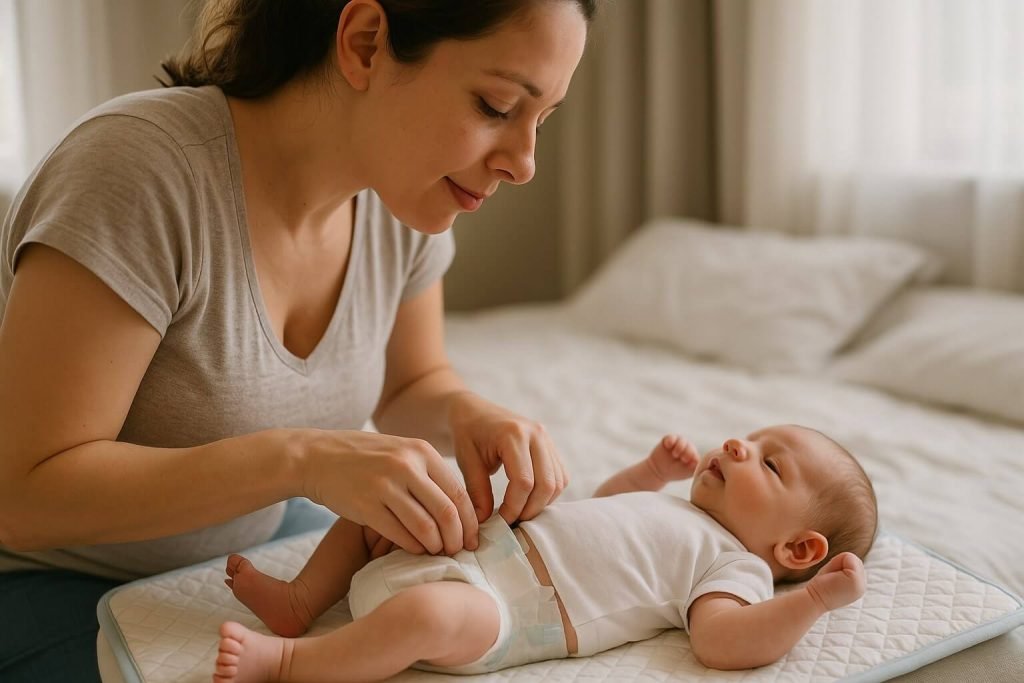
👶 Understanding Newborn Diaper Habits
Newborns have delicate skin and unpredictable digestion. During the first month, they can urinate as often as every 1 to 3 hours and have several bowel movements daily.
- Breastfed babies typically poop more often—sometimes after every feeding.
- Formula-fed babies may have fewer bowel movements but still require frequent diaper checks.
On average, newborns go through 10 to 12 diapers per day in the first month. That’s a lot of changing!
🕒 How Often Should Newborns Be Changed?
Here’s a quick breakdown:
| Type of Diaper Soil | Frequency of Changing |
|---|---|
| Wet Diaper | Every 2 to 3 hours |
| Poopy Diaper | Immediately |
| Overnight | At least once or as needed |
Why Change Wet Diapers Frequently?
Even if it’s “just pee,” leaving a wet diaper on for too long can lead to:
- Diaper rash
- Skin irritation
- Sleep disturbances
Using highly absorbent diapers might minimize wetness, but timely changes are still essential for skin health.
💩 How to Know When Your Newborn Needs a Change
Babies can’t tell you with words, but they have their ways! Look out for:
- Fussiness or crying without an obvious cause
- Diaper feels heavy or full
- Visible leakage
- Redness or irritation during bath time
Pro tip: Use diapers with a wetness indicator line—a game changer for sleep-deprived parents.
🌙 Nighttime Diaper Changing: What’s the Rule?
Many new parents ask, “Do I need to wake my baby to change a diaper at night?”
If your newborn is sleeping soundly and only has a wet diaper, you may not need to wake them. However, poopy diapers should be changed immediately, day or night, to prevent:
- Diaper rash
- Infection risk
- Disrupted sleep due to discomfort
Using overnight diapers with better absorbency and applying a diaper rash cream before bedtime can help your baby stay comfortable through the night.
👼 Tips to Make Diaper Changes Easier
Let’s make this daily task smoother and more efficient:
- Keep supplies within reach: wipes, fresh diaper, cream, and changing mat.
- Use a gentle diaper wipe: alcohol- and fragrance-free is best.
- Create a routine: babies thrive on consistency.
- Talk or sing to your baby during changes—it helps both of you bond and eases their anxiety.
And remember, practice makes perfect! You’ll be a diaper-changing pro in no time.
⚠️ What Happens If You Don’t Change a Newborn Often Enough?
Ignoring frequent diaper changes can cause:
- Painful diaper rash
- Yeast infections
- Urinary tract infections
- Sleepless nights and fussiness
By staying proactive, you’re not just keeping your baby clean—you’re also building a strong foundation for healthy habits.
🌿 Choosing the Right Diaper: Cloth vs. Disposable
Each has pros and cons:
| Type | Pros | Cons |
|---|---|---|
| Disposable | Convenient, absorbs more, easy to use | Can be expensive, less eco-friendly |
| Cloth | Eco-friendly, soft on skin | Frequent washing, time-consuming |
Many modern cloth options now offer snap closures and absorbent inserts, making them more parent-friendly than ever.
📅 Sample Diaper Change Schedule for Newborns
This helps new parents feel more in control:
| Time of Day | Activity |
|---|---|
| After feeding | Check for poop or wetness |
| Mid-morning | Scheduled diaper change |
| Before/after nap | Diaper check & change if needed |
| Early evening | Fresh diaper before wind-down |
| Before bedtime | Diaper change + rash cream |
| Overnight (1–2x) | Check/change if baby wakes |
This isn’t rigid, but it’s a helpful rhythm to aim for.
✅ Final Thoughts
So, how often should newborns be changed? The answer is simple: frequently and attentively. Your baby’s comfort and skin health depend on it. Whether you’re a first-time parent or need a refresher, establishing a thoughtful diaper-changing routine is one of the most loving things you can do.