🧼 1. Wash and Prep Before You Pack
Before storing anything, wash all baby clothes using a gentle, fragrance-free detergent. This removes stains, oils, and bacteria that could cause yellowing or mildew over time.
- Avoid fabric softeners as they can leave residues that attract pests.
- Dry completely—even slight moisture can lead to mold or mildew.
- Inspect for damage and repair small tears or loose buttons.
Pro Tip: For heirloom items like christening gowns, consider professional cleaning and preservation.
📦 2. Choose the Right Storage Containers
Not all containers are created equal. The right choice depends on your space, climate, and how long you plan to store the clothes.
Best Options:
- Plastic bins with airtight lids: Great for moisture and pest protection.
- Vacuum-sealed bags: Ideal for saving space in small apartments.
- Cotton or muslin garment bags: Perfect for delicate or heirloom items.
Avoid cardboard boxes—they attract pests and absorb moisture.
🏷️ 3. Organize by Size, Season, and Type
Sorting clothes before storage makes future retrieval a breeze.
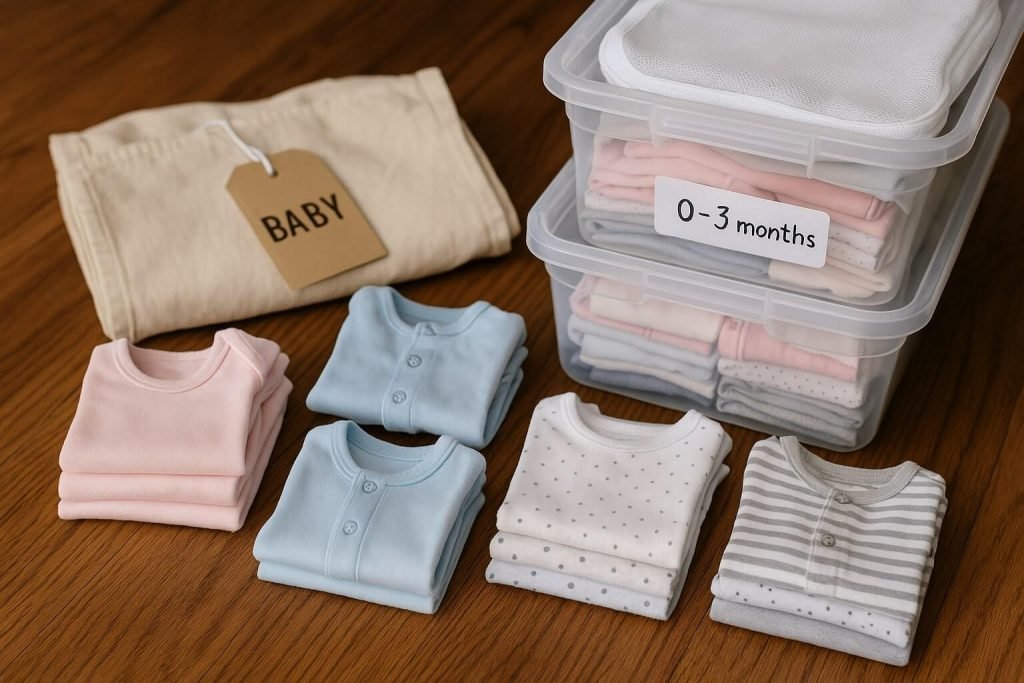
- Group by size (e.g., 0–3 months, 3–6 months)
- Separate by season (summer vs. winter wear)
- Bundle by type (onesies, pajamas, outerwear)
Label each container clearly with the size range and season. Use waterproof labels or insert a printed list inside the bin.
🌡️ 4. Store in a Cool, Dry, and Dark Place
Where you store baby clothes matters just as much as how.
- Avoid attics and basements unless they’re climate-controlled.
- Ideal locations: under-bed storage, closets, or guest room wardrobes.
- Keep away from direct sunlight to prevent fading.
Add silica gel packets or cedar blocks to absorb moisture and deter pests naturally.
🧵 5. Preserve Sentimental or Heirloom Pieces
Some baby clothes are just too special to part with. For these:
- Use acid-free tissue paper to wrap delicate fabrics.
- Store in archival-quality boxes or breathable cotton bags.
- Keep accessories (like hats or booties) in separate labeled pouches.
Check on these items every 6–12 months to ensure they remain in good condition.
🧽 6. Avoid Common Mistakes
Even well-meaning parents can make storage missteps. Here’s what to avoid:
- ❌ Storing unwashed clothes
- ❌ Using scented detergents or mothballs
- ❌ Overstuffing containers (causes wrinkles and fabric stress)
- ❌ Forgetting to label bins
🧠 Bonus: What to Do With Clothes You Don’t Store
Not every item needs to be saved. Consider these options:
- Donate gently used clothes to shelters or parenting groups.
- Sell online via marketplaces like Facebook or local consignment shops.
- Repurpose into quilts, memory bears, or framed keepsakes.
🙋 Frequently Asked Questions (FAQs)
Q1: How long can baby clothes be stored safely?
A: With proper washing, drying, and storage in airtight containers, baby clothes can last 5–10 years or more without damage.
Q2: Can I store baby clothes in vacuum-sealed bags?
A: Yes! Vacuum-sealed bags are great for saving space and protecting against moisture. Just ensure clothes are completely dry before sealing.
Q3: What’s the best way to label storage bins?
A: Use waterproof labels or insert a printed list inside the bin. Include size range, season, and clothing type for easy identification.
Q4: How do I prevent yellow stains on stored baby clothes?
A: Always wash and dry clothes thoroughly before storage. Avoid plastic bags that trap moisture and use acid-free tissue for delicate items.
Q5: Should I store baby shoes and accessories separately?
A: Yes. Store shoes, hats, and accessories in smaller labeled containers or pouches to prevent damage and make them easier to find later.