
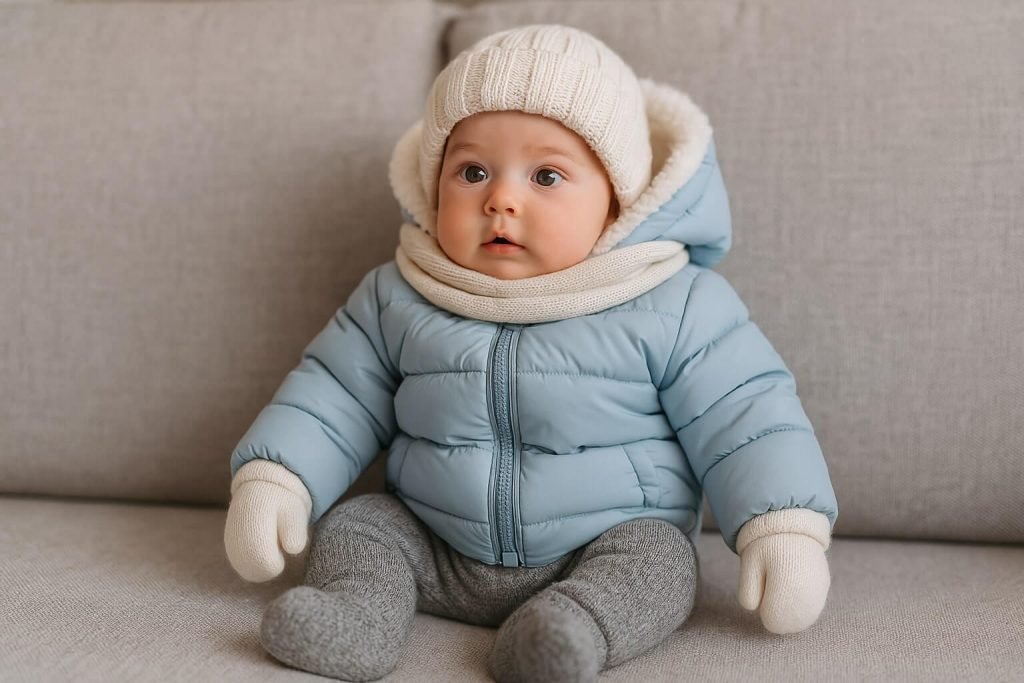
❄️ Why Is Layering Important for Babies?
Babies can’t regulate their body temperature as effectively as adults. In cold weather, improper clothing can lead to chills or overheating—both of which can be dangerous.
Layering helps:
- Trap warm air between layers
- Adjust your baby’s outfit easily as temperatures change
- Keep your baby cozy without bulky clothing
Let’s explore how to do it right.
👶 Basic Baby Layering Strategy for Winter
A simple rule of thumb: Dress your baby in one more layer than you would wear in the same environment.
1. Base Layer: Moisture-Wicking and Soft
Start with a cotton or bamboo bodysuit or onesie. Look for:
- Snug but breathable fabric
- Long sleeves for full coverage
- Moisture-wicking material to keep skin dry
2. Middle Layer: Insulation
This is the warming layer. Depending on how cold it is, you can opt for:
- Fleece sleepers or rompers
- Knitted cardigans or wool pullovers
- Footed pajamas with warm lining
3. Outer Layer: Weather Protection
Shield your baby from wind and cold with:
- Puffer jackets
- Snowsuits for outdoor play
- Blanket-style car seat covers (for car rides)
Make sure outer layers are:
- Easy to remove
- Not too bulky (especially in a car seat)
- Weather-resistant
🧢 Essential Winter Accessories for Babies
Don’t forget the little extras! These small items make a big difference.
- Hats: Soft, fleece-lined caps that cover the ears.
- Mittens: Cotton or wool mittens with elastic wrists.
- Booties or socks: Thick wool or fleece booties.
- Neck warmers: Avoid scarves; opt for neck gaiters or warm bibs.
🔒 Safety Note: Always remove bulky outerwear before placing your baby in a car seat. Use a car seat cover or layer blankets on top after securing the harness.
🌡️ Indoor Layering Tips
When inside, you want your baby to stay warm—but not sweat.
Tips:
- Use a sleep sack or wearable blanket for naps and bedtime.
- Avoid electric blankets or space heaters near the baby.
- Set the room temperature around 68–72°F (20–22°C).
🍼 Signs Your Baby Is Too Hot or Too Cold
Too Hot:
- Flushed cheeks
- Sweaty neck or back
- Rapid breathing
Too Cold:
- Cold hands and feet
- Pale or bluish skin
- Fussiness
Check your baby’s chest or back to gauge their true body temperature, not just hands or feet.
🛏️ Layering for Sleep: What Should Baby Wear at Night?
At bedtime, use breathable fabrics. Over-layering during sleep can increase the risk of SIDS (Sudden Infant Death Syndrome).
Safe Sleepwear:
- Fitted cotton onesie
- Fleece sleeper or footed pajamas
- Wearable blanket or sleep sack
Avoid:
- Loose blankets
- Heavy quilts
- Hats or mittens during sleep
🧼 Washing Winter Layers: Baby-Friendly Tips
- Use fragrance-free, hypoallergenic detergent
- Wash new clothes before use
- Avoid fabric softeners (they can irritate baby’s skin)
📝 Final Thoughts
Layering doesn’t have to be complicated. With the right layers and a little observation, you’ll keep your baby warm, happy, and safe all winter long. Always check your baby’s comfort, and remember: adaptability is key. Whether you’re staying indoors or heading out for a snowy stroll, these baby layering tips for winter will ensure your little one is cozy without compromise.
🤔 SEO-Friendly FAQs
Q1: What is the best material for baby winter layers?
A: Opt for breathable fabrics like cotton for base layers and fleece or wool for mid-layers. Avoid harsh synthetic fibers that can irritate baby skin.
Q2: How can I tell if my baby is too hot in winter clothing?
A: Check their back or chest. If they’re sweaty or flushed, they may be overdressed. Adjust by removing a layer.