Feeding your baby outdoors can be a refreshing change—whether you’re at a picnic, in the backyard, or traveling. But without the right preparation, it can turn into a messy ordeal. Outdoor feeding sessions require a blend of practicality and comfort for both baby and parent.
In this guide, we’ll share 10 tips that make outdoor feeding sessions smooth, enjoyable, and eco-friendly, based on real parenting challenges and solutions.
🍽 1. Choose the Right Feeding Spot
Comfort is key. Opt for a shaded area with a flat surface to minimize distractions and protect your baby from sun exposure. If you’re at a park, look for benches or grassy patches and use a picnic mat as your feeding base.
🧃 2. Pack a Portable High Chair or Booster Seat
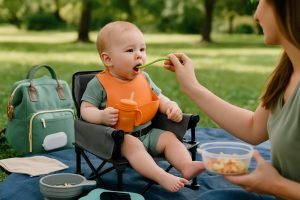
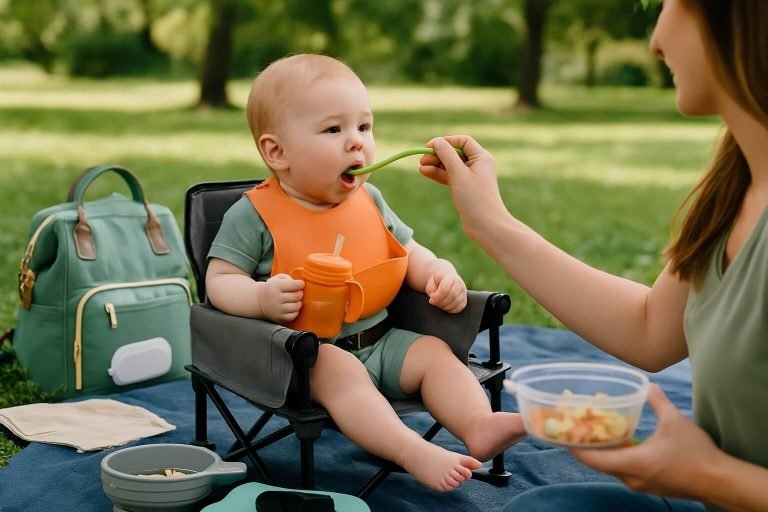
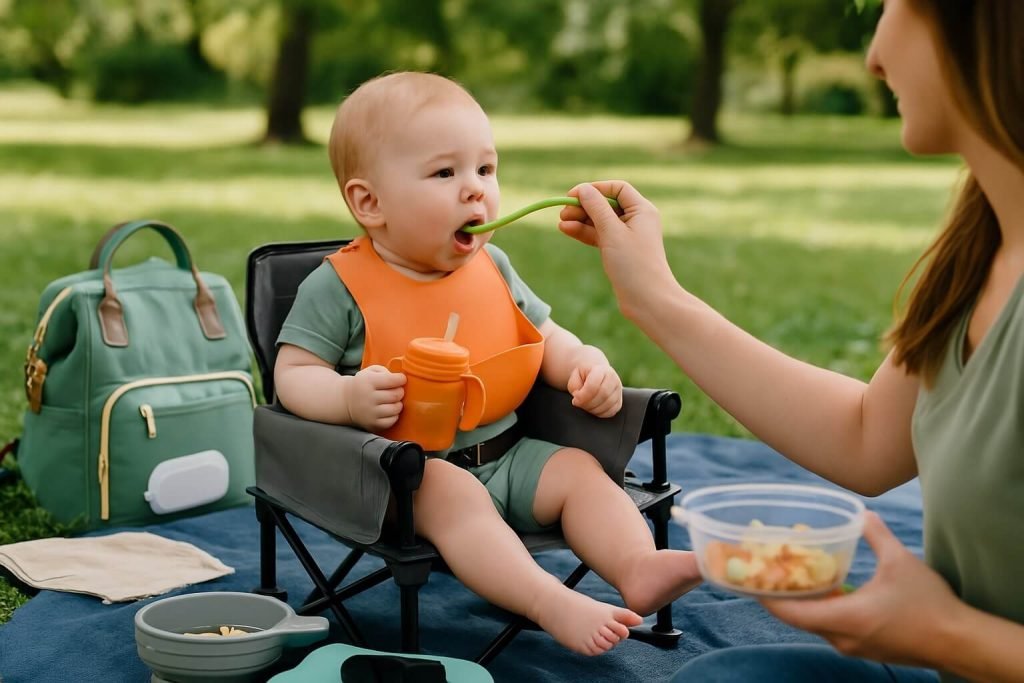
Bringing along a lightweight, foldable feeding seat makes mealtime more structured. It prevents your baby from crawling away mid-bite and supports posture for proper digestion.
🌞 3. Use Spill-Proof and Lightweight Feeding Gear
Outdoor sessions call for durability:
- Non-toxic silicone bowls and bibs
- Spill-proof sippy cups
- Compact utensil sets
These reduce mess and make cleanup easier on the go.
👶 4. Dress Smart for the Session
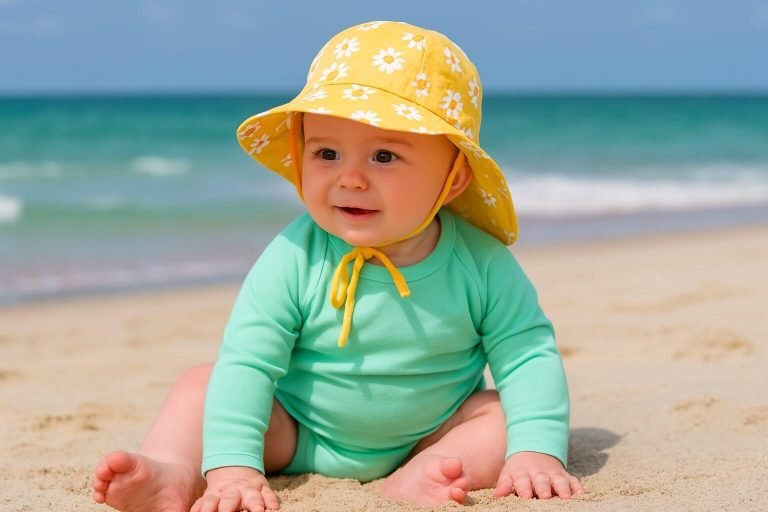
Opt for breathable, easy-to-clean clothing for your little one. Consider layering if the weather shifts and always keep a spare outfit tucked in your bag.
♻️ 5. Go Eco-Friendly with Reusables
Skip the disposables when possible:
- Cloth bibs
- Bamboo utensils
- Reusable snack containers
They’re gentler on nature and stylishly practical for any outing.
🧴 6. Carry Cleaning Essentials
A smart outdoor feeding kit includes:
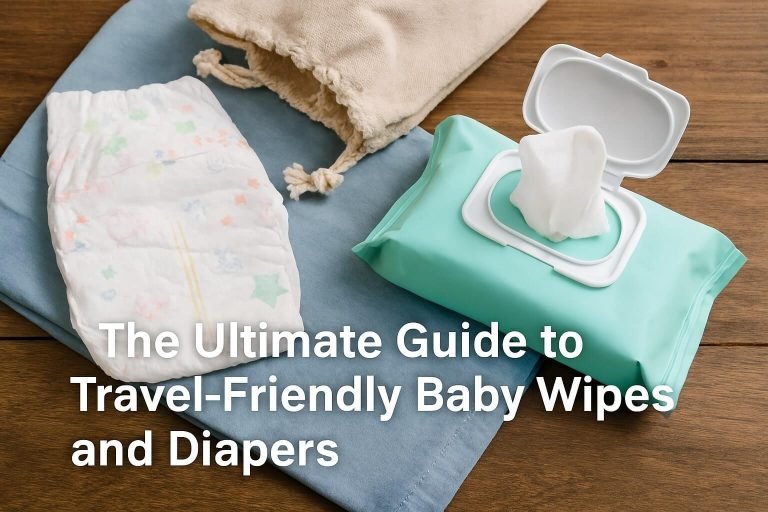
- Baby wipes
- Hand sanitizer
- Plastic zip bags (for storing soiled items)
- Biodegradable waste bags
This ensures hygiene without the hassle.
📆 7. Time It Right
Schedule feeding sessions around nap times and major distractions. Mid-morning or early evening often works best—cooler temperatures and calmer moods set the stage for better eating.
🎒 8. Pack a Versatile Diaper Bag
Use a backpack with:
- Insulated compartments (for bottles)
- Quick-access side pockets (for wipes and snacks)
- Compact changing pads (in case of blowouts)
The right bag makes every feeding session smoother.
👂 9. Watch for Baby Cues
Outdoors brings sensory overload. If your baby shows signs of overstimulation—fussing, turning away, squirming—pause and let them readjust before trying again.
📸 10. Capture the Moment but Stay Present
While snapping photos is tempting, stay engaged with your baby. Outdoor feeding is a bonding experience—be mindful, make eye contact, and talk during feeds to nurture connection.
🧠 Bonus Insight: Outdoor Feeding by Age Group
| Baby Age | Outdoor Feeding Focus | Tips |
|---|---|---|
| 0–6 months | Breastfeeding or formula only | Use nursing covers or bottle warmers |
| 6–12 months | Introducing solids | Focus on texture and finger foods |
| 12+ months | Independent snacking and meals | Let them self-feed and explore |
🤔 FAQs about Outdoor Feeding Sessions
Q1: Can I breastfeed outdoors discreetly?
Absolutely. A nursing cover or light shawl helps with privacy while allowing airflow and eye contact.
Q2: How do I keep food fresh while outdoors?
Use insulated pouches and cold packs. Avoid perishable items if you’ll be out for long hours.
Q3: What if my baby refuses to eat outdoors?
Try again later. Babies may resist due to distractions. Maintain routines and offer familiar foods.
Q4: Are there specific foods best for outdoor feeding?
Yes! Opt for:
- Banana slices
- Steamed veggies
- Cheese cubes
- Pouches of puréed food
They’re portable, nutritious, and low-mess.