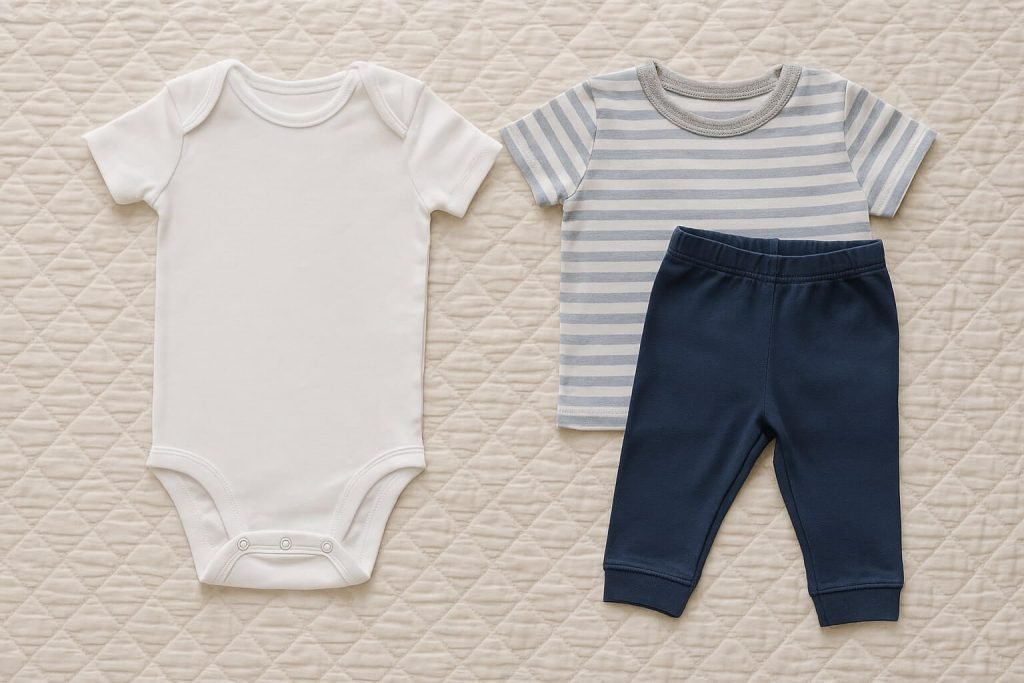
👶 Introduction: The Great Baby Outfit Shift
Onesies are a staple in every newborn’s wardrobe. They’re cozy, convenient, and perfect for diaper changes. But as your baby grows, you’ll eventually face the question: When is it time to switch from onesies to separates?
This transition isn’t just about fashion—it’s about functionality, development, and comfort. In this guide, we’ll explore the key signs that your baby is ready for separates, the benefits of making the switch, and how to do it smoothly.
🕒 When Is the Right Time to Switch?
There’s no one-size-fits-all answer, but most babies transition between 12 to 24 months. Here are the most common indicators:
1. 🚽 Potty Training Begins
- Onesies can be a hassle during potty training.
- Separates like elastic-waist pants make it easier for toddlers to undress independently.
- Encourages self-sufficiency and faster potty learning.
2. 🚶 Baby Starts Walking
- Walking babies are more active and harder to dress in one-piece outfits.
- Separates allow for quicker outfit changes and better mobility.
- Footed onesies can become slippery hazards on hard floors.
3. 📏 Outgrowing Onesie Sizes
- Most brands stop making onesies beyond 24 months.
- If your baby is tall or has a longer torso, onesies may become too snug too soon.
- Ill-fitting clothes can restrict movement and cause discomfort.
4. 🌡️ Seasonal Considerations
- In warmer months, separates offer better airflow and comfort.
- During colder seasons, layering separates can be more practical than thick onesies.
5. 🧠 Developing Independence
- Toddlers love to dress themselves.
- Two-piece outfits are easier for little hands to manage.
- Builds confidence and fine motor skills.
👕 Benefits of Switching to Separates
Making the switch isn’t just about outgrowing onesies—it’s a developmental milestone. Here’s why separates are a smart move:
- Ease of Dressing: Faster outfit changes, especially during diaper blowouts or potty emergencies.
- Style Variety: Mix-and-match tops and bottoms allow for more outfit combinations.
- Comfort: Better fit for active toddlers who are constantly on the move.
- Daycare-Friendly: Caregivers often prefer separates for quick diaper checks and changes.
🛍️ How to Transition Smoothly
Switching your baby’s wardrobe doesn’t have to be overwhelming. Here’s how to make it seamless:
✅ Start Gradually
- Introduce separates during the day while keeping onesies for bedtime.
- Let your child get used to the new feel and fit.
✅ Choose Soft, Stretchy Fabrics
- Look for cotton blends with elastic waistbands.
- Avoid stiff or scratchy materials that may irritate sensitive skin.
✅ Prioritize Function Over Fashion
- Buttons and zippers may look cute but can frustrate toddlers.
- Opt for pull-on styles and tagless labels for comfort.
✅ Involve Your Toddler
- Let them pick their outfit from two options.
- This builds excitement and encourages independence.
🧼 What About Sleepwear?
Many parents continue using onesie-style pajamas well into toddlerhood. That’s perfectly fine! Footed sleepers or zip-up onesies are great for bedtime, especially in cooler climates. Just ensure they’re not too tight and allow for free movement.
❓ FAQ: When to Switch from Onesies to Separates
Q1: What age do babies stop wearing onesies?
Most babies transition between 12 to 24 months, depending on growth, mobility, and potty training readiness.
Q2: Can toddlers still wear onesies?
Yes, especially for sleep or during colder months. However, for daytime wear, separates are often more practical.
Q3: Are separates better for potty training?
Absolutely. Pants and underwear are easier for toddlers to manage, making potty training smoother and more successful.
Q4: How do I know if my baby is ready for separates?
Look for signs like walking, resisting diaper changes, or showing interest in dressing themselves.
Q5: Should I stop using onesies completely?
Not necessarily. You can use a mix of onesies and separates based on your child’s comfort and the situation.