
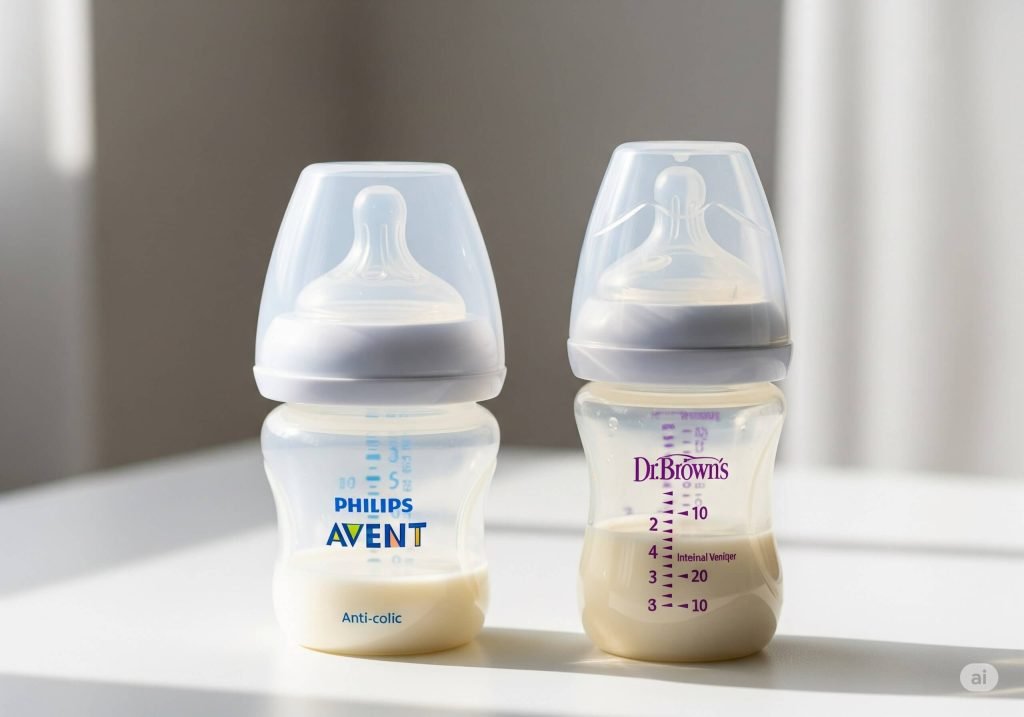
options promising to reduce colic, gas, and fussiness, it’s easy to get overwhelmed. Two brands consistently rise to the top of parent discussions: Philips Avent and Dr. Brown’s. Both are highly regarded, but they approach bottle feeding with distinct philosophies. So, which one is the champion for your little one? Let’s dive deep into a head-to-head comparison to help you make an informed decision.
Understanding the Anti-Colic Mission
Before we compare, it’s crucial to understand why “anti-colic” is such a buzzword. Colic, gas, and reflux are common woes for newborns and infants, often caused by excessive air intake during feeding. Anti-colic bottles aim to minimize this by incorporating special venting systems that prevent air from mixing with milk or formula. Both Philips Avent and Dr. Brown’s have built their reputation on addressing these issues, but their methods differ significantly.
Philips Avent: Simplicity Meets Natural Feeding
Philips Avent offers a range of bottles, with the Philips Avent Natural and Philips Avent Anti-colic being the most popular choices. The Natural line is designed to mimic the breast, promoting a natural latch and making it easier to switch between breast and bottle feeding. The Anti-colic line, as its name suggests, focuses specifically on reducing air ingestion.
Key Features of Philips Avent Bottles:
- Natural Response Nipple (Avent Natural): This innovative nipple only releases milk when your baby actively sucks, similar to breastfeeding. This controlled flow can help prevent overfeeding and promotes a more paced feeding experience.
- Anti-Colic Valve System (Avent Anti-colic): Integrated directly into the nipple, this valve flexes to keep air in the bottle and away from your baby’s tummy. It’s a simpler venting system compared to Dr. Brown’s.
- Fewer Parts, Easier Cleaning: A significant advantage for busy parents! Philips Avent bottles typically have fewer components, making assembly and cleaning a breeze. This means less time scrubbing and more time cuddling.
- Wide Neck Design: The wide opening of Philips Avent bottles makes them easy to fill and clean by hand or with a brush.
- Material Options: Available in both BPA-free plastic and glass, offering choices based on your preference for durability and eco-friendliness.
Pros of Philips Avent:
- Intuitive and natural latch for breastfed babies.
- Simple design with fewer parts for quick cleaning.
- Effective anti-colic features built into the nipple.
- Widely available and often more affordable upfront.
Cons of Philips Avent:
- Nipple flow rates can be subjective and may require experimenting to find the right one for your baby. Some parents report that Avent nipples can be slower than other brands.
- Some users have reported occasional leaks if the nipple and ring are not perfectly aligned.
Dr. Brown’s: The Advanced Venting System
Dr. Brown’s bottles are renowned for their patented internal vent system, which is the cornerstone of their anti-colic effectiveness. This green vent system channels air away from the milk, preventing air bubbles and vacuum formation. This, in turn, helps reduce oxidation of nutrients and minimizes gas, burping, and spit-up.
Key Features of Dr. Brown’s Bottles:
- Internal Vent System: This unique two-piece vent system (a vent insert and a reservoir) creates a vacuum-free feeding experience, which is clinically proven to reduce colic, gas, and burping.
- Consistent Flow: The vent system ensures a consistent flow rate, which can be beneficial for babies who struggle with irregular milk flow.
- Variety of Nipple Flow Rates: Dr. Brown’s offers a wide range of nipple flow rates, from preemie to Y-cut, allowing for precise customization as your baby grows and develops.
- Material Options: Available in both BPA-free plastic and glass.
Pros of Dr. Brown’s:
- Highly effective in reducing colic, gas, and reflux due to its advanced venting system.
- Preserves vitamins in breast milk and formula by minimizing air oxidation.
- Excellent for babies with feeding difficulties or who are prone to gas.
- Offers a wide array of nipple flow options for various stages.
Cons of Dr. Brown’s:
- More parts to clean: The internal vent system, while effective, means more components to wash and assemble, which can be time-consuming.
- Can be prone to leaks if the vent system isn’t assembled correctly.
- Can be slightly more expensive than Philips Avent bottles due to the intricate venting system.
The Verdict: Which Bottle is Right for Your Baby?
Ultimately, the “best” baby bottle is the one your baby accepts and thrives on. Many parents find success with both brands, and sometimes it comes down to trial and error.
- Choose Philips Avent if: You prioritize ease of cleaning, a more natural breast-like latch (especially if breastfeeding), and a simpler anti-colic system.
- Choose Dr. Brown’s if: Your baby suffers significantly from colic, gas, or reflux, and you’re willing to invest a little extra time in cleaning for the potential relief the advanced vent system provides.
It’s not uncommon for parents to try both brands or even use a combination. Some parents might start with Dr. Brown’s for a newborn struggling with gas and then transition to Philips Avent as their baby gets older and gas becomes less of an issue.
Consider purchasing a single bottle from each brand to see which one your baby prefers before investing in a full set. Remember, a happy baby makes for happy parents!
Frequently Asked Questions (FAQs)
Q1: Which bottle is better for breastfed babies, Philips Avent or Dr. Brown’s? A1: Philips Avent Natural bottles are often favored by breastfed babies due to their breast-like nipple design and controlled flow, which mimics natural nursing. However, some breastfed babies also do very well with Dr. Brown’s due to its consistent flow and reduction of air.
Q2: Are Dr. Brown’s bottles really harder to clean than Philips Avent? A2: Yes, generally. Dr. Brown’s bottles have more components due to their internal vent system, which requires more meticulous cleaning. Philips Avent bottles have fewer parts, making their cleaning process quicker and simpler.
Q3: Do both Philips Avent and Dr. Brown’s bottles come in glass? A3: Yes, both Philips Avent and Dr. Brown’s offer glass bottle options, which are popular for parents seeking a plastic-free alternative.
Q4: Which bottle is better for reducing gas and colic? A4: Both brands aim to reduce gas and colic. Dr. Brown’s is often praised for its highly effective internal vent system, which is clinically proven to reduce these issues significantly. Philips Avent’s anti-colic valve also works well for many babies, though its mechanism is simpler.
Q5: What are the different nipple flow rates available for each brand? A5: Both brands offer various nipple flow rates to accommodate your baby’s age and feeding pace. Dr. Brown’s typically has a wider range of very slow flow options (like preemie and ultra-preemie), while Philips Avent’s “Natural Response” nipples are designed to respond to your baby’s suckling, controlling the flow naturally.