
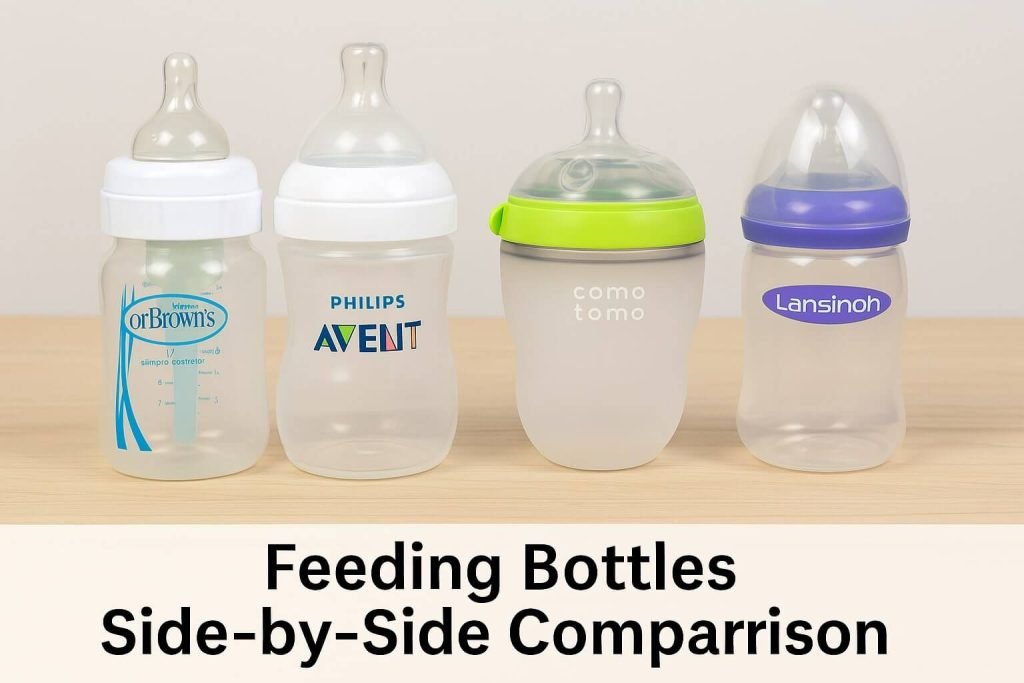
Why a Side-by-Side Comparison Matters
Choosing the right feeding bottle can feel overwhelming. With so many brands, materials, and features, parents often struggle to find the best option for their baby’s needs. That’s where a side-by-side comparison becomes invaluable—it simplifies decision-making by highlighting key differences in one place.
Whether you’re a first-time parent or upgrading your baby gear, this guide will help you confidently choose the right bottle.
🧴 Key Factors to Consider When Comparing Feeding Bottles
Before diving into the comparison, here are the most important features to evaluate:
- Material: Plastic, glass, or silicone
- Nipple Design: Breast-like, anti-colic, flow rate
- Ease of Cleaning: Dishwasher-safe, wide neck
- Anti-Colic Features: Venting systems to reduce gas
- Size Options: From 2 oz to 9 oz and beyond
- Durability: Resistance to heat, drops, and wear
🥇 Top Feeding Bottles Compared Side-by-Side
| Feature | Dr. Brown’s Options+ | Philips Avent Natural | Comotomo Silicone Bottle | Lansinoh Momma Bottle |
|---|---|---|---|---|
| Material | BPA-free plastic / glass | BPA-free plastic / glass | 100% silicone | BPA-free plastic / glass |
| Anti-Colic System | Internal vent system | Airflex vent | Dual anti-colic vents | Air Ventilation System (AVS) |
| Nipple Design | Narrow, consistent flow | Breast-shaped, soft | Wide, breast-like | NaturalWave nipple |
| Ease of Cleaning | Many parts, needs brush | Easy to clean | Wide neck, minimal parts | Dishwasher-safe |
| Sizes Available | 2 oz, 4 oz, 8 oz | 4 oz, 9 oz, 11 oz | 5 oz, 8 oz | 5 oz, 8 oz |
| Microwave Safe | Yes (with caution) | Yes | Yes | Yes (for sterilizing only) |
| Leak Resistance | May leak if not assembled properly | Good seal | Excellent | May leak if over-tightened |
| Best For | Colicky babies | Breastfed + formula-fed | Breastfed babies | Transitioning from breast |
🧪 Real-World Testing Insights
- Dr. Brown’s is a favorite among parents dealing with colic but requires more cleaning effort.
- Philips Avent offers a great balance of comfort and performance, especially for combo-fed babies.
- Comotomo is ideal for breastfed babies due to its soft, squeezable body and natural feel.
- Lansinoh is praised for its smooth transition from breast to bottle and affordability.
🌱 Eco-Friendly Considerations
If sustainability is a priority, consider:
- Glass bottles: Durable and recyclable, but heavier.
- Silicone bottles: Lightweight, flexible, and long-lasting.
- Plastic bottles: Widely available but may wear out faster.
🧼 Cleaning & Maintenance Tips
- Use a bottle brush for narrow-neck bottles like Dr. Brown’s.
- Sterilize regularly using a microwave sterilizer or boiling water.
- Replace nipples every 2–3 months or when signs of wear appear.
🛒 Buying Tips for Parents
- Start with 2–3 different brands to test what your baby prefers.
- Look for starter kits that include multiple sizes and nipple flows.
- Check for compatibility with breast pumps if you’re pumping.
❓ FAQs About Feeding Bottles
Q1: What is the best feeding bottle for colic?
A: Dr. Brown’s Options+ is widely recommended for colicky babies due to its internal vent system that reduces air intake.
Q2: Are glass bottles better than plastic?
A: Glass bottles are more eco-friendly and durable but heavier. Plastic is lightweight and shatterproof but may degrade over time.
Q3: How often should I replace baby bottle nipples?
A: Every 2–3 months or sooner if you notice cracks, discoloration, or thinning.
Q4: Can I use feeding bottles in the microwave?
A: Most bottles are microwave-safe, but always remove the nipple and vent parts before heating.