
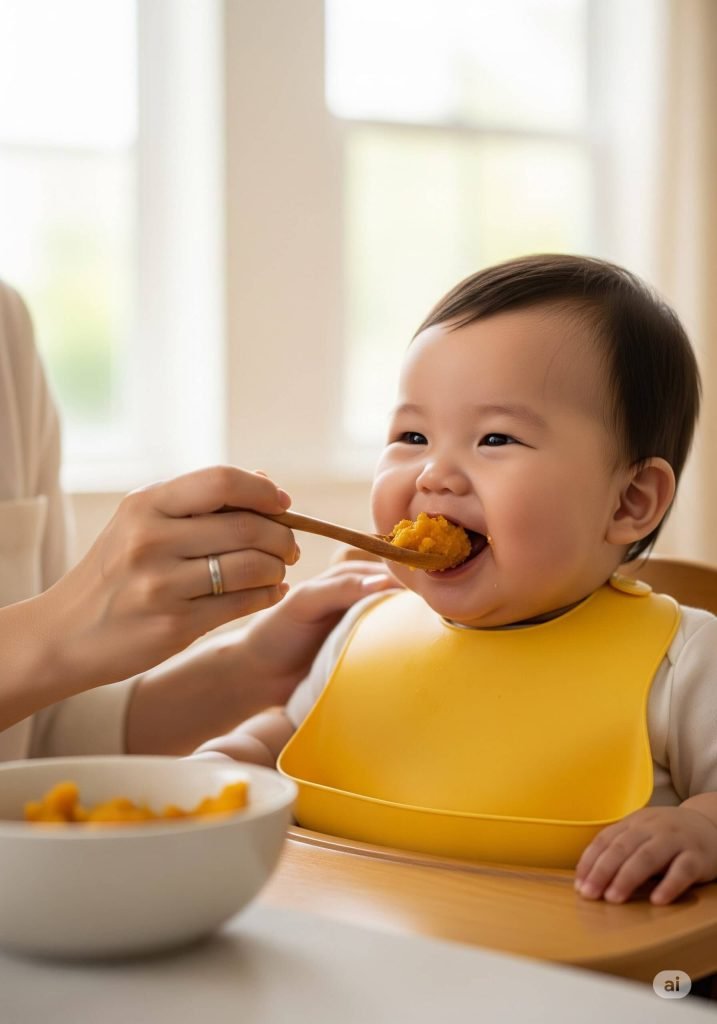
The Golden Window: When is Your Baby Truly Ready for Solids?
For decades, the conventional wisdom suggested starting solids around 4 months. However, current recommendations from leading health organizations like the American Academy of Pediatrics (AAP) and the World Health Organization (WHO) advocate for waiting until around 6 months of age. This “golden window” is crucial because by 6 months, most babies have developed the necessary physiological and developmental readiness for solid foods.
While 6 months is a general guideline, every baby is unique. Instead of focusing solely on age, it’s more important to observe your baby for key signs of readiness. Think of it as a checklist of developmental milestones rather than a strict calendar date.
Key Signs Your Baby is Ready for Solid Foods:
Your baby will give you clear signals when they’re ready to embark on their solid food adventure. Look out for these important developmental cues:
- Good Head and Neck Control: This is perhaps the most crucial sign. Your baby should be able to hold their head up steadily and without support. This control is essential for safe swallowing and preventing choking.
- Sitting Up with Support: While they don’t need to sit perfectly independently, your baby should be able to sit upright in a high chair or with some assistance. This posture ensures proper digestion and reduces the risk of aspiration.
- Loss of Tongue-Thrust Reflex: Newborns have a natural tongue-thrust reflex that pushes anything placed on their tongue out of their mouth. This reflex helps prevent choking on foreign objects. As they mature, this reflex diminishes, allowing them to accept and swallow food.
- Showing Interest in Food: Does your baby watch you intently while you eat? Do they lean forward, open their mouth, or reach for your food? These are strong indicators of their curiosity and readiness to explore new tastes and textures.
- Opening Their Mouth When Food Approaches: When you offer a spoon with food, your baby should open their mouth in anticipation, rather than keeping it tightly closed.
- Doubling Their Birth Weight: While not a standalone sign, this indicates that your baby is growing and their digestive system is maturing.
- Increased Hunger Even After Breast Milk or Formula: If your baby seems hungrier than usual, even after regular breast milk or formula feedings, it might be a sign they need more substantial nourishment.
It’s vital to remember that not all babies will exhibit all these signs at precisely 6 months. Some may be ready a little earlier, while others might need a few more weeks. Patience and observation are key!
Why Waiting Until 6 Months is Recommended:
There are several compelling reasons why health professionals recommend waiting until around 6 months:
- Immature Digestive System: A baby’s digestive system isn’t fully developed until around 6 months. Introducing solids too early can put stress on their immature gut, potentially leading to digestive issues, allergies, or sensitivities.
- Reduced Risk of Allergies: While research on this is ongoing, some studies suggest that introducing highly allergenic foods after 6 months, and in combination with continued breastfeeding, might reduce the risk of developing certain food allergies. However, recent guidelines actually recommend introducing common allergens earlier once solids are started. Always consult your pediatrician for the latest recommendations on allergen introduction.
- Reduced Risk of Choking: The development of good head control and the diminishing tongue-thrust reflex significantly reduce the risk of choking when solids are introduced at the appropriate time.
- Adequate Nutrient Absorption: Breast milk or formula provides all the necessary nutrients for the first 6 months of life. Beyond this point, iron stores in babies begin to deplete, making iron-fortified cereals or iron-rich foods crucial.
- Continued Benefits of Breastfeeding/Formula Feeding: For the first year of life, breast milk or formula remains the primary source of nutrition. Introducing solids too early can displace these vital feedings.
How to Introduce Solid Foods: Starting Your Baby’s Culinary Journey
Once your baby is showing all the signs of readiness, it’s time to embark on this exciting adventure! Here are some practical tips for a smooth and enjoyable transition:
- Start with Single-Ingredient Foods: Begin with plain, iron-fortified infant cereal (rice, oat, or barley) mixed with breast milk or formula. Alternatively, you can start with pureed single vegetables or fruits like sweet potato, avocado, banana, or peas.
- Offer One New Food at a Time: Introduce one new food every 3-5 days. This allows you to identify any potential allergic reactions or sensitivities.
- Small Portions: Start with just 1-2 teaspoons of food once or twice a day. The goal at this stage is exploration, not caloric intake.
- Choose the Right Time: Offer solids when your baby is well-rested and not overly hungry or tired. A good time is often after a small breast milk or formula feeding.
- Be Patient and Positive: Your baby might make funny faces, spit out food, or refuse it altogether. This is normal! Don’t force it. Make mealtimes a positive and enjoyable experience.
- Vary Textures as They Grow: As your baby gets older and more accustomed to solids, gradually introduce thicker purees, mashed foods, and eventually soft finger foods.
- Prioritize Safety: Always supervise your baby during mealtimes. Avoid foods that pose a choking hazard, such as whole grapes, nuts, popcorn, and large chunks of meat or cheese.
What About Baby-Led Weaning (BLW)?
Baby-Led Weaning is an increasingly popular approach where babies are offered appropriately sized finger foods from the very beginning, allowing them to self-feed and explore textures at their own pace. If you’re considering BLW, ensure your baby meets all the signs of readiness, especially excellent head and trunk control, and the ability to grasp and bring food to their mouth. Consult your pediatrician before starting BLW to ensure it’s suitable for your baby.
Conclusion
Introducing solid foods to your baby is a thrilling chapter in their development. By understanding the signs of readiness, waiting until around 6 months, and approaching mealtimes with patience and positivity, you can ensure a safe, healthy, and enjoyable experience for both you and your little one. Remember, every baby is different, so trust your instincts and always consult your pediatrician for personalized advice. Happy feeding!
Frequently Asked Questions (FAQs)
Q1: What is the best first food for a baby? Meta Description: Learn about the ideal first foods for babies, including iron-fortified cereals and single-ingredient purees, to kickstart their solid food journey safely.
A1: The best first foods are typically iron-fortified infant cereals (rice, oat, or barley) mixed with breast milk or formula. Alternatively, plain, pureed single-ingredient vegetables (like sweet potato or peas) or fruits (like avocado or banana) are excellent choices. The key is to start with easily digestible, non-allergenic options.
Q2: Can I start solids before 6 months if my baby seems ready? Meta Description: Understand the risks and benefits of introducing solids before 6 months and why healthcare professionals generally recommend waiting.
A2: While some babies may show signs of readiness slightly earlier, health organizations generally recommend waiting until around 6 months. Introducing solids too early can put stress on an immature digestive system and may displace vital nutrients from breast milk or formula. Always discuss your baby’s readiness with your pediatrician.
Q3: How much solid food should my baby eat initially? Meta Description: Get practical guidance on the appropriate portion sizes for babies when they first start solids, focusing on exploration over caloric intake.
A3: When you first introduce solids, the goal is exploration, not filling your baby up. Start with very small amounts, about 1-2 teaspoons, once or twice a day. As your baby gets older and more accustomed to solids, you can gradually increase the quantity and frequency.
Q4: What foods should I avoid giving my baby? Meta Description: Discover a list of foods to avoid for babies due to choking hazards, allergenic risks, or other health concerns.
A4: Avoid honey (for babies under 1 year due to botulism risk), cow’s milk as a primary drink (before 1 year), choking hazards (whole grapes, nuts, popcorn, hard candies, large chunks of meat/cheese), added sugar or salt, and raw or undercooked meats/eggs. Always consult your pediatrician for a complete list and the latest recommendations on allergen introduction.
Q5: How do I know if my baby is having an allergic reaction to a new food? Meta Description: Learn to identify the signs of an allergic reaction in babies when introducing new foods and what steps to take if one occurs.
A5: Signs of an allergic reaction can include hives, rash, swelling of the face or lips, vomiting, diarrhea, difficulty breathing, or wheezing. If you suspect an allergic reaction, stop feeding the food immediately and contact your pediatrician or seek emergency medical attention if symptoms are severe. Introducing one new food every 3-5 days helps in identifying triggers.