Breast milk is often called “liquid gold” for a reason—it’s packed with nutrients, antibodies, and everything your baby needs to thrive. But when it comes to feeding your little one, especially with stored milk, knowing how to warm breast milk safely is essential. Improper warming can destroy nutrients or even pose a risk to your baby. In this guide, we’ll walk you through the safest, most effective methods to warm breast milk—whether it’s from the fridge or freezer—without compromising its quality.
🧊 Why Warming Breast Milk Matters
While some babies are perfectly fine drinking cold or room-temperature milk, many prefer it warm—closer to body temperature (around 98.6°F or 37°C). Warming breast milk can:
- Improve taste and comfort for your baby
- Help mix separated fat layers
- Mimic the natural breastfeeding experience
However, overheating breast milk can destroy vital nutrients and antibodies, so it’s crucial to warm it gently and evenly.
🔥 Safe Methods to Warm Breast Milk
Here are the most recommended, baby-safe ways to warm breast milk:
1. Warm Water Bath (Most Recommended)
- Fill a bowl or mug with warm (not boiling) water.
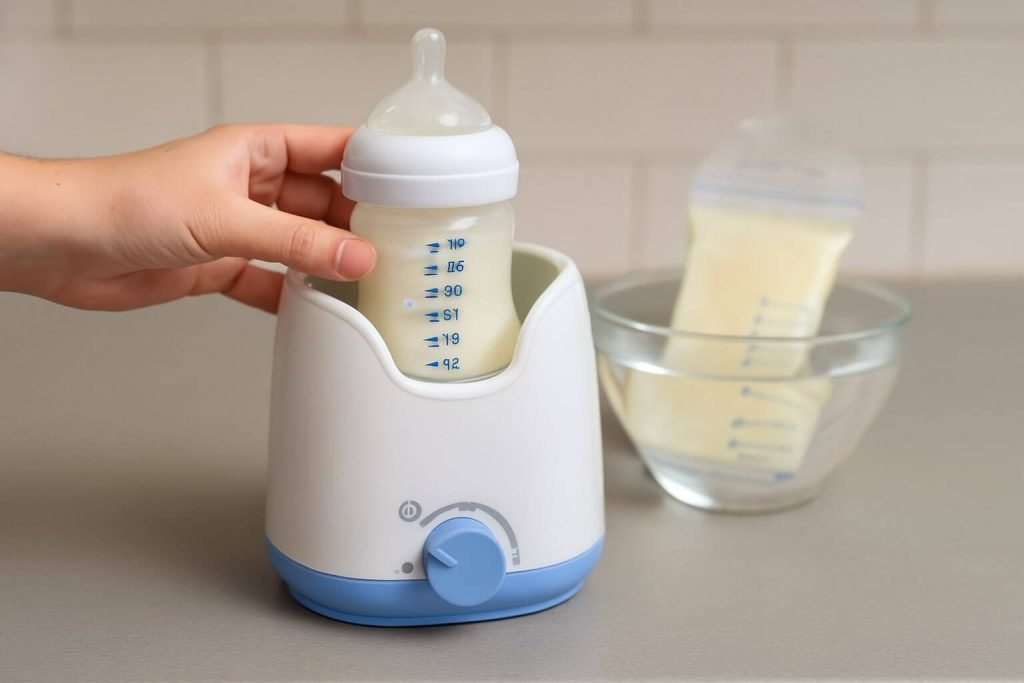
- Place the sealed bottle or milk storage bag into the water.
- Let it sit for 5–10 minutes, swirling gently to distribute heat.
- Test the temperature on your wrist before feeding.
✅ Pros: Gentle, preserves nutrients ❌ Cons: Takes a few minutes
2. Bottle Warmer
- Follow the manufacturer’s instructions.
- Place the bottle in the warmer and heat to the desired temperature.
- Swirl gently before feeding.
✅ Pros: Convenient, consistent ❌ Cons: Some models may overheat—monitor closely
3. Running Warm Tap Water
- Hold the sealed bottle under warm running water.
- Rotate the bottle to ensure even heating.
- Test before feeding.
✅ Pros: Quick ❌ Cons: Wastes water, harder to control temperature
🚫 Methods to Avoid
❌ Microwave
Never microwave breast milk. It can:
- Create dangerous hot spots
- Destroy nutrients and antibodies
- Melt plastic bottles or bags
❌ Boiling Water
Avoid placing bottles in boiling water. High heat can:
- Break down milk proteins
- Damage bottle materials
- Overheat milk quickly
🧊 How to Warm Frozen Breast Milk
If your milk is frozen, follow these steps:
- Thaw in the Refrigerator Overnight
- Safest method to preserve nutrients
- Use within 24 hours
- Quick Thaw in Warm Water
- Place the frozen milk bag in warm water
- Never refreeze once thawed
- Avoid Microwaving Frozen Milk
- Same risks as above—hot spots and nutrient loss
🕒 Storage & Timing Tips
- Use warmed milk within 2 hours
- Do not reheat previously warmed milk
- Label milk with date/time when stored
🧪 How to Test the Temperature
Before feeding:
- Shake or swirl the bottle gently (don’t shake vigorously)
- Drop a few drops on your inner wrist
- It should feel warm—not hot
🧠 Pro Tips for Busy Parents
- Store milk in small portions (2–4 oz) to reduce waste
- Use BPA-free bottles or breast milk storage bags
- Keep a thermometer handy to check milk temperature (ideal: 98–100°F)
❓ Frequently Asked Questions (FAQs)
Q1: Can I warm breast milk more than once?
No. Once breast milk has been warmed, it should be used within 2 hours. Reheating can lead to bacterial growth and nutrient loss.
Q2: Is it okay to give cold breast milk?
Yes. Some babies don’t mind cold milk. It’s safe as long as it’s been stored properly.
Q3: How long can I leave warmed milk out?
Up to 2 hours. After that, discard any unused milk.
Q4: Can I mix freshly pumped milk with warmed milk?
No. Always cool freshly pumped milk before combining it with previously stored milk.