When it comes to babywearing, parents are often torn between two popular options: baby carriers and baby slings. Both offer hands-free convenience, promote bonding, and support your baby’s development—but they differ in design, comfort, and usability. In this guide, we’ll break down the pros and cons of each, helping you decide which is the better fit for your lifestyle.
🧵 What Is a Baby Sling?
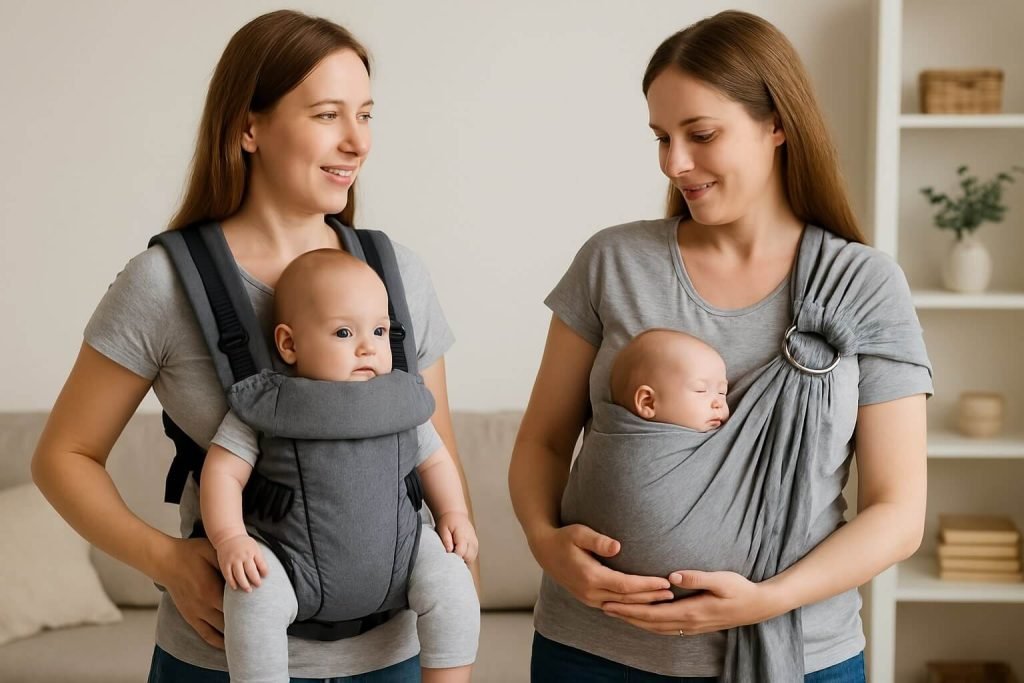
A baby sling is a long piece of fabric worn over one shoulder and across the torso, creating a pouch for your baby. It’s often lightweight, breathable, and ideal for newborns.
✅ Pros of Baby Slings:
- Ergonomic for newborns: Supports the natural “M” position for healthy hip development.
- Promotes bonding: Encourages skin-to-skin contact and emotional closeness.
- Lightweight and portable: Easy to fold and carry.
- Quick to wear: No buckles or complex adjustments.
- Eco-friendly options: Many slings are made from organic or sustainable fabrics.
❌ Cons of Baby Slings:
- Limited support: May strain one shoulder during long wear.
- Learning curve: Requires practice to position baby safely.
- Less suitable for older babies: Not ideal for toddlers or extended outings.
🎒 What Is a Baby Carrier?
A baby carrier is a structured device with padded straps and buckles that distribute your baby’s weight evenly across your shoulders and hips. It’s designed for long-term use and offers multiple carrying positions.
✅ Pros of Baby Carriers:
- Superior support: Ideal for longer wear and heavier babies.
- Multiple positions: Front, back, and hip carry options.
- Adjustable fit: Suitable for different body types.
- Secure and safe: Buckles and straps ensure stability.
- Great for active parents: Perfect for hiking, errands, or travel.
❌ Cons of Baby Carriers:
- Bulkier design: Less compact than slings.
- Can be warm: May trap heat in warmer climates.
- Higher cost: Structured carriers tend to be more expensive.
🆚 Baby Carrier vs Sling: Key Differences
| Feature | Baby Sling | Baby Carrier |
|---|---|---|
| Support | Light support for short wear | Strong support for long wear |
| Ease of Use | Simple but requires practice | Buckles make it user-friendly |
| Age Suitability | Best for newborns | Suitable from newborn to toddler |
| Portability | Highly portable | Bulkier, less compact |
| Cost | Generally affordable | Often more expensive |
| Bonding | Excellent for skin-to-skin contact | Good, but less intimate |
🧘♀️ Which One Should You Choose?
The answer depends on your lifestyle, baby’s age, and personal preferences:
- Choose a sling if you want a minimalist, breathable option for short outings and newborn cuddles.
- Choose a carrier if you need long-term support, versatility, and comfort for active days or older babies.
Many parents find value in owning both—a sling for quick errands and a carrier for longer adventures.
❓ Frequently Asked Questions (FAQs)
Q1: Are baby slings safe for newborns?
Yes, when used correctly, slings support the natural posture of newborns and promote healthy hip development. Always follow safety guidelines and ensure your baby’s face is visible and unobstructed.
Q2: Can I use a baby carrier for a newborn?
Some carriers are designed for newborns, especially those with infant inserts. Check the manufacturer’s age and weight recommendations before use.
Q3: Which is better for breastfeeding on the go?
Baby slings offer easier access for discreet breastfeeding, especially in cradle or hip carry positions.
Q4: Do baby carriers cause back pain?
Not typically. Structured carriers distribute weight evenly, reducing strain. However, improper adjustment can lead to discomfort.
Q5: What’s the best option for hot climates?
Slings made from breathable fabrics like cotton or linen are ideal for warm weather. Some carriers also feature mesh panels for ventilation.