
Setting up a nursery is an exciting milestone for expectant parents. From choosing the perfect crib to selecting adorable decor, every decision feels important. Among the most debated pieces of furniture are the changing table and the dresser. Both offer a designated space for diaper changes and storage, but they serve different long-term needs.
If you’re wondering which option is right for your family, you’ve come to the right place. This comprehensive guide will delve into a detailed changing table vs. dresser comparison, exploring the pros and cons of each, helping you make an informed decision that suits your space, budget, and lifestyle.
The Dedicated Diapering Zone: The Changing Table
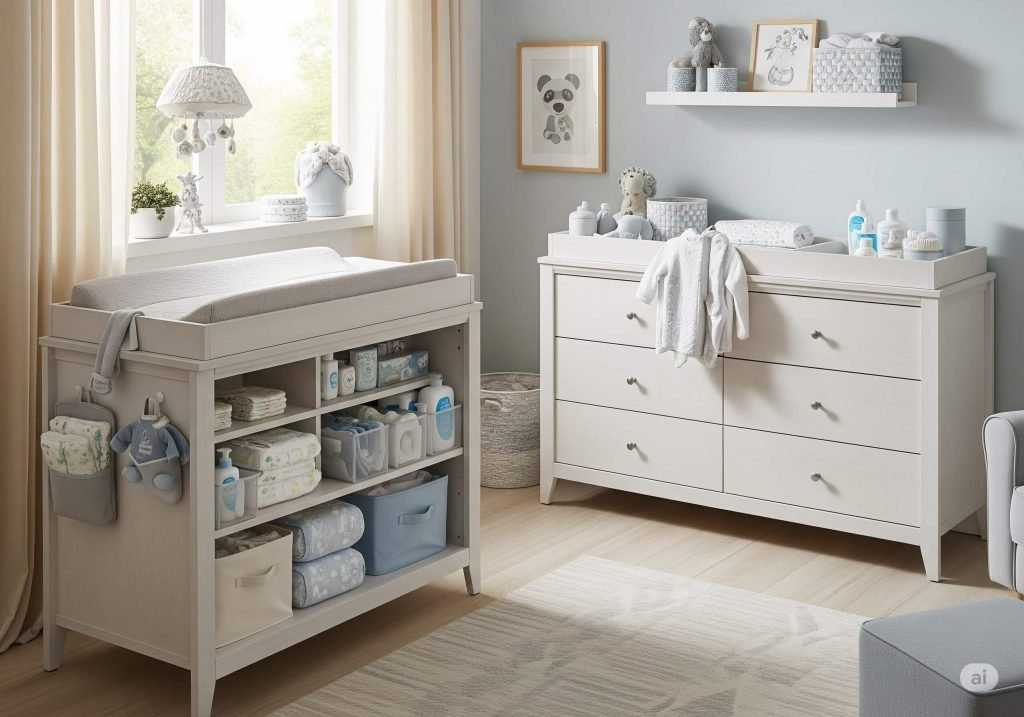
A traditional changing table is a piece of furniture specifically designed for diaper changes. It typically features a raised surface with safety rails or contoured edges, a changing pad, and often open shelving or drawers underneath for quick access to diapering essentials.
Pros of a Changing Table:
- Ergonomic Comfort: One of the biggest advantages is the comfortable height it offers for diaper changes. No more bending over the bed or floor, which can be a lifesaver for your back, especially during those frequent newborn changes.
- Safety Features: Many changing tables come with built-in safety straps and guardrails, providing an added layer of security to prevent your baby from rolling off during a change. While vigilance is always key, these features offer peace of mind.
- Organized Diapering Station: With open shelves or compartments, changing tables are excellent for keeping diapers, wipes, creams, and other essentials readily accessible. This can streamline the diapering process, making it more efficient and less chaotic.
- Compact Designs: Some changing tables are designed to be quite compact, making them a good option for smaller nurseries where space is at a premium. There are also foldable models for ultimate space-saving.
- Visually Defined Purpose: A changing table clearly defines a specific area for diaper changes, which can be helpful for establishing a routine and keeping the rest of the nursery tidy.
Cons of a Changing Table:
- Limited Longevity: This is perhaps the most significant drawback. A changing table’s primary function is for diaper changes. Once your child is potty-trained (typically around 2-3 years old), the changing table becomes largely obsolete. You might find yourself with a piece of furniture that no longer serves a purpose, requiring you to find a new use for it or dispose of it.
- Takes Up Dedicated Space: While some are compact, a changing table still requires a dedicated footprint in the nursery. If your nursery is already small, this can be a crucial consideration.
- Less Versatile: Unlike a dresser, a changing table isn’t easily repurposed for other uses in the room once the diapering phase is over. Its specialized design makes it less adaptable to a growing child’s needs.
- Potential for Clutter: If the changing table has open shelving, it can sometimes lead to a cluttered appearance if not meticulously organized.
The Multi-Tasking Marvel: The Dresser
A dresser, on the other hand, is a versatile piece of storage furniture with multiple drawers. While its primary role is to store clothing, it can easily be converted into a functional changing station with the addition of a changing pad or a changing tray.
Pros of a Dresser as a Changing Station:
- Exceptional Longevity: This is where a dresser truly shines. A high-quality dresser will grow with your child, transitioning seamlessly from a changing station in infancy to a clothes storage unit for toddlers, children, and even teenagers. This makes it a long-term investment.
- Ample Storage Space: Dressers offer significantly more storage space than most changing tables, with deeper and wider drawers perfect for organizing baby clothes, blankets, burp cloths, and later, toys and school supplies.
- Versatility and Adaptability: The beauty of a dresser is its inherent versatility. Once your baby no longer needs a changing pad, simply remove it, and you have a fully functional dresser. This adaptability allows for greater flexibility in nursery design as your child’s needs evolve.
- Aesthetic Integration: Dressers come in a vast array of styles, finishes, and colors, making it much easier to find one that perfectly complements your nursery’s decor and the overall aesthetic of your home. They can blend seamlessly into any room.
- Cost-Effective in the Long Run: While the initial cost of a dresser might be slightly higher than a basic changing table, its extended lifespan and multi-functional nature often make it a more cost-effective choice in the long run, as you won’t need to purchase additional storage furniture later.
- Safety with Anchoring: When used as a changing station, a dresser should always be anchored to the wall to prevent tipping, a crucial safety measure for any tall furniture in a child’s room.
Cons of a Dresser as a Changing Station:
- No Built-in Safety Features (for the changing surface): Unlike dedicated changing tables, dressers don’t typically come with built-in guardrails or safety straps for the changing surface itself. You’ll need to rely on a contoured changing pad with non-slip backing or a changing tray that secures to the dresser top.
- Height Considerations: The height of a dresser might not be as ergonomically ideal for everyone compared to a purpose-built changing table. Taller parents might find themselves bending more.
- Potential for Messy Top: While drawers keep clutter hidden, the top surface used for changing can become a catch-all for various items if not kept organized.
Making the Right Choice: Factors to Consider
Now that we’ve explored the individual merits, let’s consider the key factors that will help you decide between a changing table and a dresser:
- Nursery Size: For smaller nurseries, a compact changing table or a narrower dresser might be more suitable. If you have ample space, either option works. However, remember the long-term footprint of a changing table.
- Budget: While a changing table might have a lower upfront cost, consider the long-term value. A dresser, with its extended utility, often proves to be a better investment over time.
- Longevity and Future Use: If you prioritize furniture that will grow with your child and serve multiple purposes, a dresser is the clear winner. If you’re comfortable with a piece of furniture that has a limited lifespan, a changing table could be an option.
- Aesthetics and Style: Dressers offer a wider range of styles and finishes, allowing for greater design flexibility. Changing tables tend to be more utilitarian in appearance.
- Personal Preference and Convenience: Ultimately, your personal preference for how you want your changing station to function plays a big role. Do you prefer a dedicated, purpose-built unit, or do you value the multi-functionality of a dresser?
- Safety First: Regardless of your choice, always prioritize safety. Ensure any furniture is sturdy and, if using a dresser, anchor it to the wall to prevent tip-overs. Never leave your baby unattended on any changing surface.
Safety Tips for Your Changing Station (Whether Table or Dresser)
No matter what you choose, safety is paramount. Follow these essential tips:
- Never Leave Your Baby Unattended: Even for a second, even if they’re strapped in. Always keep one hand on your baby.
- Keep Supplies Within Reach (Your Reach!): Have all diapers, wipes, and creams within arm’s length so you don’t have to turn away or reach far.
- Use Safety Straps (if available): If your changing table or pad has safety straps, use them, but do not rely on them solely.
- Anchor Furniture: Always anchor dressers and freestanding changing tables to the wall to prevent tip-overs.
- Clear the Area: Keep the changing surface free of toys, cords, or anything your baby could grab and pull down.
- Know Weight Limits: Stop using a changing table when your baby reaches the manufacturer’s recommended weight or age limit.
Conclusion: The Verdict
For most modern parents seeking a blend of practicality, longevity, and style, the dresser with a changing pad or changing tray often emerges as the more appealing and ultimately more economical choice. It offers the best of both worlds: a functional changing station during infancy and a durable, versatile storage solution for years to come.
However, a traditional changing table can be an excellent option for those with specific needs, such as very limited space where a compact, dedicated unit is desired, or for individuals who prioritize the ergonomic height above all else and don’t mind the limited lifespan.
By carefully considering your family’s unique needs and the factors outlined above, you can confidently choose the perfect changing solution for your nursery, ensuring both convenience and safety for your little one.
Frequently Asked Questions (FAQs)
Q1: Is a changing table absolutely necessary for a nursery? A1: No, a dedicated changing table is not absolutely necessary. Many parents opt to use a dresser with a changing pad on top, or even change their baby on a bed or floor with a portable changing mat. It’s about convenience and personal preference.
Q2: How long will I actually use a changing table? A2: A dedicated changing table is typically used until your child is potty-trained, usually between 2 and 3 years old, or when they exceed the manufacturer’s weight limit. After this, its utility significantly diminishes.
Q3: Can any dresser be used as a changing table? A3: Most sturdy dressers with a flat top can be used as a changing station with the addition of a changing pad or tray. However, it’s crucial to ensure the dresser is stable and, most importantly, anchored to the wall to prevent tipping.
Q4: What are the key safety features to look for in a changing table or dresser used for changing? A4: For changing tables, look for safety straps, guardrails (at least 2 inches high on all four sides), and a sturdy, stable build. For dressers, ensure it’s made of solid construction and always anchor it to the wall using anti-tip kits. Always keep one hand on your baby.
Q5: What’s the biggest benefit of choosing a dresser over a changing table? A5: The biggest benefit of a dresser is its longevity and versatility. It serves as a changing station for a few years and then seamlessly transitions into a functional dresser for your child’s clothes for many more years, offering excellent long-term value.
SEO Friendly Meta Description for FAQs: