
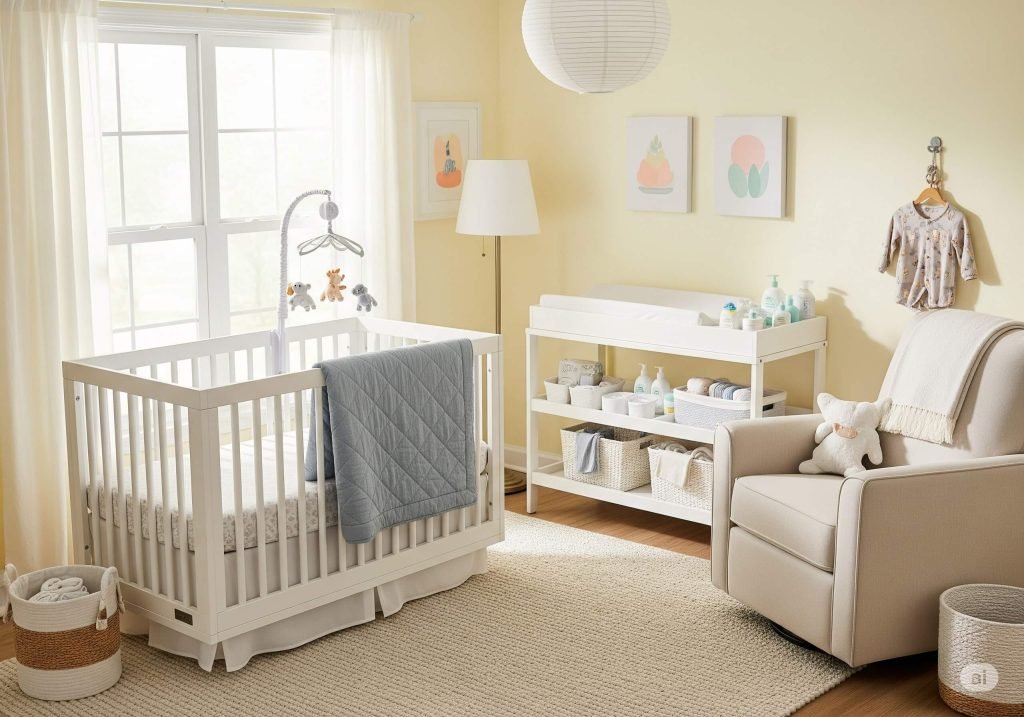
1. The Sleep Sanctuary: Crib or Bassinet
The absolute cornerstone of any newborn nursery is a safe sleeping space. For the first few months, many parents opt for a bassinet to keep the baby close by, especially for nighttime feedings. Look for a bassinet with breathable mesh sides and a firm, flat mattress. As your baby grows (or from day one, if you prefer), a crib becomes the primary sleep area.
Key considerations for cribs:
- Safety Standards: Ensure your crib meets current safety standards. Look for models manufactured after 2011, which adhere to stricter guidelines (e.g., non-drop sides, slat spacing no more than 2 3/8 inches apart).
- Firm Mattress: A firm, flat mattress that fits snugly into the crib is crucial. There should be no gaps larger than two fingers between the mattress and the crib sides to prevent entrapment.
- Fitted Sheets: Stock up on 2-4 fitted crib sheets made from breathable materials like cotton.
- Bare is Best: Remember the “bare is best” rule. Avoid bumpers, loose blankets, pillows, or stuffed animals in the crib to reduce the risk of Sudden Infant Death Syndrome (SIDS). Opt for wearable blankets or sleep sacks for warmth.
2. Changing Station: Practicality at Your Fingertips
Diaper changes will be a frequent occurrence, so a well-equipped changing station is a game-changer.
- Changing Table or Dresser with Changing Pad: A dedicated changing table offers convenience with built-in storage. Alternatively, a dresser with a secure changing pad topper is a versatile option that can grow with your child.
- Changing Pad: A waterproof and easy-to-clean changing pad is essential for your baby’s comfort and hygiene. Some come with safety straps.
- Diaper Pail: A diaper pail with a tight seal is invaluable for containing odors from soiled diapers.
- Diapers and Wipes: Stock up on newborn-sized diapers (they grow fast!) and fragrance-free, hypoallergenic baby wipes.
- Diaper Rash Cream: Keep a good quality diaper rash cream readily available to prevent and soothe irritation.
3. Feeding Nook: Comfort for Parent and Baby
Whether you’re breastfeeding or bottle-feeding, a comfortable spot in the nursery for feeding sessions is a must.
- Rocking Chair or Glider: A comfortable rocking chair or glider will be your best friend during late-night feedings and soothing sessions. Look for one with good back support and armrests.
- Nursing Pillow (if breastfeeding): A nursing pillow provides support for both you and your baby, promoting proper latch and reducing strain.
- Burp Cloths: You can never have too many burp cloths! They are essential for protecting your clothes from spit-up.
- Bottles and Sterilizer (if bottle-feeding): If you plan to bottle-feed, ensure you have a selection of bottles with appropriate nipples, a bottle brush for cleaning, and a sterilizer (steam, microwave, or cold water).
- Formula (if applicable): If using formula, have some on hand as per your pediatrician’s recommendations.
4. Clothing and Storage: Keeping Things Tidy
Newborns go through many outfit changes, so efficient storage is key to a calm nursery.
- Dresser or Wardrobe: A dresser with multiple drawers is ideal for organizing onesies, sleepers, socks, and other small clothing items. A wardrobe can be useful for hanging special outfits.
- Hangers and Drawer Organizers: Baby-sized hangers and drawer organizers will help keep clothes neat and easily accessible.
- Onesies and Sleepers: Stock up on a good supply of soft, breathable onesies and footed pajamas (sleepers). Opt for snap closures for easier diaper changes.
- Hats, Mittens, and Socks: Essential for temperature regulation and preventing scratches.
- Swaddle Blankets/Sleep Sacks: These provide a sense of security for newborns and are a safe alternative to loose blankets.
5. Bathing and Hygiene: Gentle Care
Bath time can be a lovely bonding experience with the right supplies.
- Baby Bathtub: A baby-specific bathtub provides a safe and comfortable way to bathe your newborn.
- Gentle Baby Wash and Shampoo: Choose fragrance-free, tear-free options designed for sensitive newborn skin.
- Soft Hooded Towels and Washcloths: Hooded towels help keep your baby warm after a bath.
- Baby Nail Clippers/File: Tiny nails can be surprisingly sharp, so a dedicated baby nail care set is crucial.
- Nasal Aspirator: Helpful for clearing tiny stuffy noses.
- Baby Lotion/Oil: For moisturizing delicate skin.
6. Health and Safety: Peace of Mind
Having a few key health and safety items on hand can provide immense peace of mind.
- Baby Monitor: A baby monitor (audio or video) allows you to keep an eye and ear on your baby while they sleep or play in their nursery.
- Thermometer: A reliable digital thermometer is essential for checking your baby’s temperature.
- First Aid Kit: A basic baby-specific first aid kit with essentials like mild pain relievers (consult your pediatrician), bandages, and antiseptic wipes.
- Outlet Covers: Childproof all electrical outlets.
- Furniture Anchors: Secure all dressers, bookshelves, and other tall furniture to the wall to prevent tip-overs.
- Cordless Window Treatments: Opt for cordless blinds or curtains to eliminate strangulation hazards.
Beyond the Basics: Nice-to-Have Items
Once you have the essentials covered, consider these items that can enhance comfort and convenience:
- White Noise Machine: Can help soothe your baby to sleep by mimicking womb-like sounds or blocking out household noises.
- Nightlight: A soft nightlight is useful for nighttime feedings and diaper changes without fully waking your baby.
- Play Mat/Activity Gym: Provides a safe and stimulating space for tummy time and independent play.
- Books and Soft Toys: Age-appropriate books and soft, safe toys for gentle stimulation.
- Humidifier: Can be helpful in dry climates or when your baby has a cold.
Organizing Your Nursery: Tips for Efficiency
- Zone It Out: Create designated zones for sleeping, changing, feeding, and dressing.
- Vertical Storage: Utilize wall-mounted shelves or tall bookcases to maximize space, especially in smaller nurseries.
- Baskets and Bins: These are your best friends for corralling diapers, wipes, burp cloths, and toys.
- Drawer Dividers: Keep tiny clothes and accessories organized within dresser drawers.
- Keep Essentials Close: Store frequently used items, like diapers and wipes, within arm’s reach of the changing table.
Final Thoughts on Nursery Preparation
Remember, the goal is to create a nurturing environment, not a showroom. Prioritize safety and functionality. Don’t feel pressured to buy everything at once; you’ll quickly learn what truly works for you and your baby. The most essential “item” in any nursery is the love and care you provide.
Frequently Asked Questions (FAQ)
Q1: What is the most important item to buy for a newborn nursery?
Meta Description: Discover the single most crucial item for your newborn’s nursery setup, ensuring their safety and comfort from day one.
A1: The most important item for a newborn nursery is undeniably a safe and secure sleeping space, whether it’s a crib or a bassinet that meets current safety standards. This provides a designated, hazard-free area for your baby to sleep soundly.
Q2: How many clothes does a newborn really need?
Meta Description: Learn how many newborn outfits are truly essential, helping parents avoid overbuying and manage frequent changes.
A2: Newborns go through multiple outfit changes a day due to spit-up and diaper blowouts. It’s recommended to have at least 6-8 onesies or bodysuits and 4-6 sleepers or footed pajamas. It’s often smart to have a few items in newborn size and some in 0-3 months, as babies grow quickly!
Q3: Is a changing table essential, or can I use a dresser?
Meta Description: Explore practical options for diaper changing stations, comparing dedicated changing tables with versatile dresser alternatives for your nursery.
A3: While a dedicated changing table is convenient, it’s not strictly essential. Many parents opt for a dresser with a secure changing pad topper. This is a highly functional and space-saving solution, as the dresser can continue to be used for clothing storage as your child grows.
Q4: What safety tips should I prioritize when setting up a newborn nursery?
Meta Description: Ensure your baby’s nursery is safe with these essential tips, covering furniture, cords, and crib environment to prevent accidents.
A4: Prioritize these safety tips: secure all furniture (dressers, bookshelves) to the wall to prevent tip-overs; ensure the crib mattress fits snugly with no gaps; keep the crib clear of all loose bedding, pillows, and toys; use cordless window treatments; and cover all electrical outlets with childproof covers.