
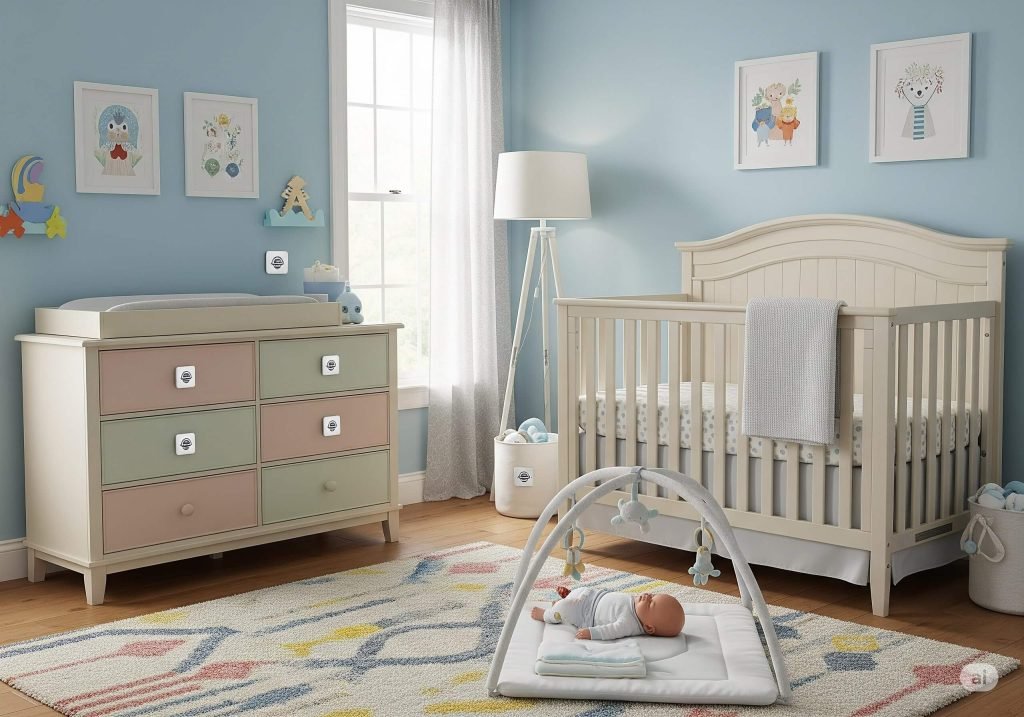
Babies are naturally curious and incredibly fast. Before you know it, they’ll be rolling, crawling, pulling themselves up, and taking their first wobbly steps. Every piece of furniture, from the crib to the dresser, can become a potential hazard if not properly secured. Tip-overs, pinched fingers, falls, and access to unsafe items are just some of the risks. By proactively babyproofing, you create an environment where your child can freely explore and develop without encountering serious dangers.
Essential Babyproofing Tips for Every Nursery Furniture Piece
Let’s break down how to babyproof specific items in your nursery:
1. The Crib: Your Baby’s Safe Sleep Sanctuary
The crib is where your baby will spend a significant amount of time sleeping, so its safety is paramount.
- Follow Safety Standards: Always choose a crib that meets current safety standards. For instance, in the US, look for cribs manufactured after 2011, as safety standards were updated then.
- Firm Mattress Fit: Ensure the mattress fits snugly in the crib. There should be no more than two fingers’ width of space between the mattress and the crib sides. Gaps can lead to entrapment.
- Snug-Fitting Sheets: Use only fitted sheets that are designed for crib mattresses. Loose bedding can pose a suffocation risk.
- Bare is Best: Keep the crib free of pillows, loose blankets, bumper pads, stuffed animals, or any other soft objects. These items increase the risk of suffocation and SIDS (Sudden Infant Death Syndrome). Opt for a wearable blanket or sleep sack instead of loose blankets.
- Slat Spacing: The crib slats should be no more than inches apart to prevent your baby’s head from getting trapped.
- Mobile Placement: If you have a mobile, ensure it’s securely attached and out of your baby’s reach. Remove it once your baby can get up on all fours (around 5 months) or shows interest in pulling themselves up.
- Crib Placement: Position the crib away from windows, blinds, or curtains with cords. Corded window treatments are a serious strangulation hazard. Consider cordless options.
- No Hanging Items Above: Avoid hanging heavy pictures, shelves, or other decorative items directly above the crib, as they could fall.
2. Dressers and Changing Tables: Stability is Key
Dressers and changing tables are often tall and heavy, making tip-overs a significant concern as your baby learns to climb or pull themselves up.
- Anchor, Anchor, Anchor! This is perhaps the most critical step for dressers and changing tables. Use anti-tip furniture straps or L-brackets to securely anchor these pieces to the wall. Ensure the anchors are firmly attached to wall studs for maximum stability. Many new furniture pieces come with these kits; if not, they are readily available at hardware stores.
- Lower Heavy Items: Store heavier items like books or bulkier clothing in the lower drawers to help distribute the weight and increase stability.
- Childproof Locks: Install childproof locks or latches on all dresser drawers. This prevents curious little hands from opening drawers, which can lead to pinched fingers, access to unsafe items, or using drawers as steps to climb. Magnetic locks are a popular and discreet option.
- Changing Table Safety Straps: Always use the safety belt or harness provided on your changing table. Even when using the strap, never leave your baby unattended on the changing table. Keep at least one hand on your baby at all times.
- Organized Essentials: Keep all changing essentials (diapers, wipes, creams) within arm’s reach while you’re at the changing table, so you don’t have to turn away from your baby. Store lotions and medicines in higher, locked drawers or cabinets outside the nursery.
- No Climbing Enticements: Avoid placing toys or other tempting items on top of dressers or changing tables that might encourage your child to climb.
3. Bookcases and Shelving Units: Secure and Tidy
Just like dressers, bookcases and shelving units pose a severe tip-over risk.
- Wall Anchoring is a Must: Secure all bookcases and shelving units to the wall using anti-tip straps or brackets. This is non-negotiable.
- Bottom-Heavy Storage: Place heavier books and toys on the lowest shelves. This lowers the center of gravity and makes the unit more stable.
- No Climbable Shelves: Avoid shelves that could easily be used as a ladder by a climbing toddler.
- Keep it Clear: Don’t overload shelves, as this can make the unit unstable and objects more likely to fall.
4. Other Nursery Furniture: Looking Beyond the Basics
Don’t forget other furniture pieces that might be in the nursery:
- Gliders and Rocking Chairs: While generally safe, ensure they are placed in an area where your child cannot get fingers or toes caught in moving parts.
- Toy Chests: If you have a toy chest with a lid, ensure it has a safety hinge that prevents the lid from slamming shut, protecting little fingers and heads. Alternatively, opt for toy storage with open bins or lightweight lids.
- Small Tables/Nightstands: If your nursery includes small tables or nightstands, secure them if they are unstable. Apply corner and edge protectors to any sharp corners to prevent bumps and bruises.
- Window Treatments: As mentioned for cribs, ensure all window blind and curtain cords are secured out of reach or opt for cordless options.
- Electrical Outlets: Cover all unused electrical outlets with safety caps or sliding outlet covers to prevent your baby from inserting objects.
- Cord Management: Secure all electrical cords from lamps, baby monitors, and other devices. Use cord clips, ties, or cord management solutions to keep them neatly tucked away and out of reach, preventing strangulation hazards.
General Babyproofing Best Practices
- Get Down on Your Baby’s Level: Crawl around your nursery to see potential hazards from your baby’s perspective. What looks safe from an adult’s height might be a danger zone for a curious crawler.
- Regular Checks: As your baby grows and develops new skills, revisit your babyproofing measures regularly. What was safe at 6 months might not be at 12 months.
- Non-Toxic Materials: When choosing furniture or babyproofing products, look for items made with non-toxic finishes and materials, especially for items your baby might chew or touch frequently.
- Professional Help: If you’re unsure about any aspect of babyproofing, consider consulting a certified childproofing specialist.
- Educate Older Siblings: If you have older children, teach them about the importance of baby safety and why certain items are off-limits for the baby.
- Supervision is Key: Remember, babyproofing is a crucial layer of protection, but constant supervision remains the most effective safety measure.
By following these babyproofing nursery furniture tips, you can transform your baby’s room into a secure and nurturing environment, allowing them to grow, learn, and explore safely.
FAQ: Babyproofing Nursery Furniture
Q1: When should I start babyproofing my nursery furniture?
A1: It’s best to start babyproofing your nursery furniture before your baby arrives, or at the very least, before they become mobile (typically around 6-10 months, when they start crawling, sitting up, or pulling themselves to stand). This proactive approach ensures a safe environment as soon as they begin to explore.
Q2: What’s the most important piece of furniture to babyproof in a nursery?
A2: While all nursery furniture needs attention, dressers and changing tables are arguably the most critical to anchor to the wall. Tip-overs from these heavy, tall items can cause severe injuries or even fatalities. Crib safety (snug mattress, no loose bedding) is also paramount for safe sleep.
Q3: Are furniture anchors difficult to install?
A3: Most furniture anchors are relatively easy to install and come with instructions. They typically involve securing a strap or bracket to the back of the furniture and then to a wall stud. If you’re uncomfortable doing it yourself, a handyman or professional can assist.
Q4: Can I use old or secondhand nursery furniture?
A4: While some secondhand items can be safe, it’s crucial to exercise caution with nursery furniture. Always check for current safety standards, recalls, loose or missing parts, and lead paint, especially for cribs and older pieces. It’s often safer to invest in new cribs that meet the latest safety guidelines.
Q5: What are some hidden hazards to look for beyond obvious furniture pieces?
A5: Beyond main furniture, consider blind cords (strangulation risk), electrical outlets (shock hazard), loose electrical cords (strangulation/tripping), small decorative items (choking hazard), and unsteady lamps or decor. Get down on your baby’s level to spot potential dangers.
SEO Friendly Meta Description: