
The Ultimate Guide to Baby Diaper Sizes by Weight: Ensuring Comfort & Preventing Leaks
Meta Description: Find the perfect diaper fit for your baby! Our comprehensive guide and baby diaper size chart by weight help you choose the right size, prevent leaks, and keep your little one comfortable. Say goodbye to guesswork!
Bringing a new baby home is an exhilarating journey filled with firsts, cuddles, and, let’s be honest, a lot of diaper changes. One of the most common challenges new parents face is figuring out the right diaper size. It might seem straightforward, but a ill-fitting diaper can lead to uncomfortable rashes, frustrating leaks, and unnecessary laundry.
The good news? The key to a happy, dry baby often lies in understanding the baby diaper size chart by weight. While age can be a general indicator, your baby’s weight is the most accurate determinant for selecting the perfect diaper. This guide will walk you through everything you need to know to ensure your little one stays snug, dry, and happy.
Why Does Diaper Size Matter So Much?
Think about it: an adult trying to wear clothes that are too big or too small. It’s uncomfortable, right? The same goes for your baby and their diapers.
- Too Small: A diaper that’s too small will be uncomfortably tight, leaving red marks on your baby’s waist and thighs. It restricts movement, can lead to chafing, and significantly increases the chances of leaks and dreaded “blowouts” because there simply isn’t enough absorbent material to contain everything. Moreover, a tight fit can trap moisture, contributing to diaper rash.
- Too Big: While it might seem like a larger size offers more absorbency, a diaper that’s too big will have gaps around the legs and waist. This creates ample opportunity for leaks, especially when your baby moves, crawls, or sleeps. A loose fit also means the absorbent core isn’t pressed closely enough against your baby’s skin to effectively wick away moisture.
The goal is a snug fit that allows for comfortable movement and optimal absorbency.
Understanding the Baby Diaper Size Chart by Weight
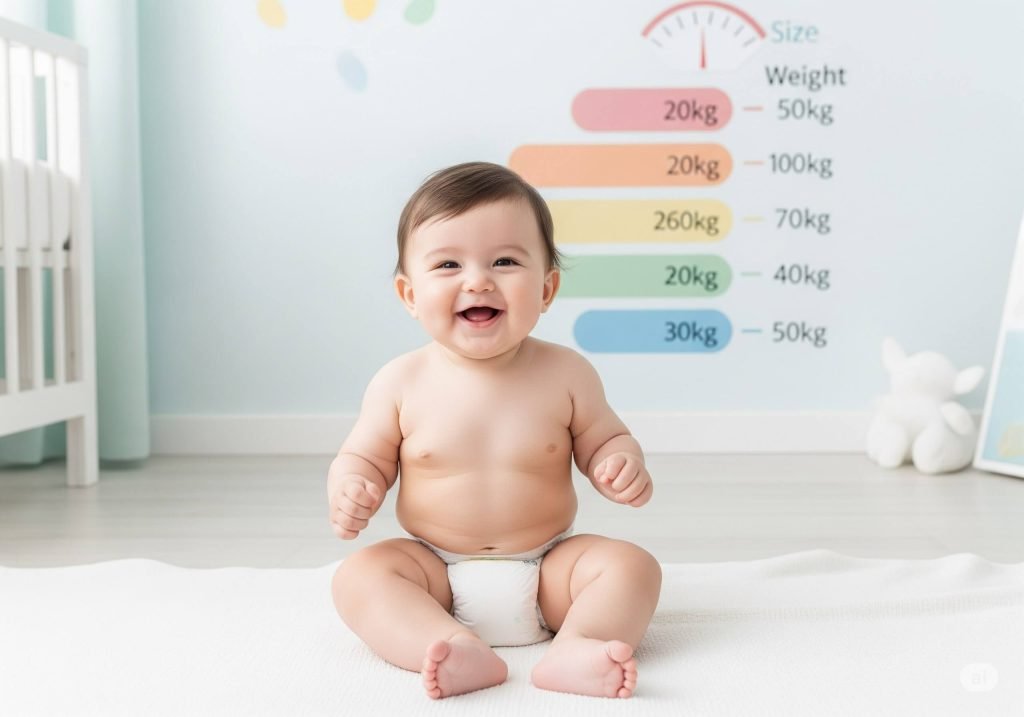
Most diaper manufacturers use weight as their primary sizing guide. While there can be slight variations between brands, the general ranges are quite consistent. Here’s a common breakdown to help you navigate the options:
Important Considerations for the Chart:
- Overlapping Weights: You’ll notice overlaps in the weight ranges. For example, a 13-pound baby might fit into both a Size 1 and a Size 2. This is where individual baby body shape comes into play. If your baby is on the cusp of two sizes, consider the signs of a good fit (discussed below).
- Brand Variations: While the general guidelines are similar, some brands might run slightly smaller or larger than others. If you’re trying a new brand, it’s a good idea to buy a smaller pack first to test the fit.
- Baby’s Build: Just like adults, babies come in all shapes and sizes. A long, slender baby might wear a different size than a shorter, chubbier baby of the same weight.
How to Tell if Your Baby’s Diaper Fits Perfectly
Beyond the weight chart, there are clear visual and practical cues that indicate a good diaper fit:
- Snug at the Waist, Not Too Tight: You should be able to comfortably fit two fingers under the waistband of the fastened diaper. The tabs should fasten securely in the middle of your baby’s tummy, not overlapping excessively or struggling to meet. If the tabs overlap, the diaper might be too big; if they don’t reach the middle, it’s likely too small.
- No Gaps Around the Legs: The leg cuffs (also called gussets or elastic ruffles) should fit snugly around your baby’s thighs without leaving red marks. There should be no gaps where leakage could occur. Ensure these ruffles are pulled out and not tucked in, as this is crucial for preventing leaks.
- Covers the Bottom Completely: The diaper should cover your baby’s entire bottom and reach up to their waist. If any part of their bottom is exposed, or the diaper sits too low, it’s a sign to size up.
- No Red Marks or Irritation: This is a big one! If you see red marks on your baby’s skin (around the waist or thighs) after removing a diaper, it’s a clear indication that it’s too tight and you need to move up a size.
- Fewer Leaks and Blowouts: If you’re suddenly experiencing more frequent leaks or messy blowouts, even if the diaper feels “right” by weight, it’s often the first sign that it’s time for the next size. Increased wetness means the diaper’s absorbency capacity is being overwhelmed.
- Comfortable Movement: Your baby should be able to move their legs freely and comfortably without the diaper bunching up or restricting their mobility. If they seem uncomfortable or restricted, the diaper might be too small.
When to Size Up: Reading Your Baby’s Cues
Babies grow quickly, and what fits perfectly today might be too small next week. Be vigilant for these signs that it’s time to transition to a larger size:
- Red marks on the waist or thighs.
- Frequent leaks or blowouts, especially if they weren’t happening before.
- The diaper looks visibly tight or barely reaches the belly button.
- The tabs struggle to meet in the front.
- The diaper doesn’t cover your baby’s entire bottom.
- Your baby seems uncomfortable or tries to pull at their diaper.
- Your baby has reached the top of the current diaper size’s weight range.
It’s always better to size up a little early rather than wait until leaks become a major problem. If your baby is on the higher end of a weight range, consider trying the next size up.
Tips for Diapering Success
- Don’t Stockpile Too Many Newborn Diapers: Newborns grow incredibly fast! While it’s tempting to buy in bulk, they might outgrow newborn sizes within a few weeks.
- Consider Overnight Diapers: Once your baby starts sleeping longer stretches, you might consider using specific “overnight” diapers. These often have extra absorbency and can prevent leaks during extended wear. Sometimes, sizing up one size for overnight diapers can also make a significant difference.
- Trial and Error: Every baby is different, and finding the perfect fit can sometimes involve a bit of trial and error with different brands and sizes. Don’t be afraid to experiment!
- Check the Leg Cuffs: A common mistake is not pulling out the inner elastic leg cuffs. Always ensure these are fluffed out around the thighs to create a proper seal.
- Diaper Features: Some diapers offer features like wetness indicators, umbilical cord cutouts (for newborns), or flexible waistbands, which can enhance comfort and convenience.
Choosing the right baby diaper size by weight is a fundamental step in ensuring your little one’s comfort and preventing messes. By paying attention to the weight charts and recognizing the signs of a good (or bad) fit, you’ll become a diaper-sizing pro in no time, keeping your baby happy, dry, and ready for all their amazing adventures!
Frequently Asked Questions (FAQ)
Q1: How do I know what size diaper my newborn needs?
Meta Description: Discover how to pick the right diaper size for your newborn. Learn about weight guidelines, umbilical cord cutouts, and signs of a perfect fit for your little one’s comfort.
For newborns, start with the “Newborn” (N) size if your baby is typically up to 10 lbs (4.5 kg). If your baby is smaller, especially under 6 lbs (2.7 kg) or a preemie, look for “Preemie” (P) sizes. Many newborn diapers also feature a convenient umbilical cord cutout to protect your baby’s delicate belly button area. Always refer to the specific brand’s weight guidelines on the package.
Q2: My baby is at the top of the weight range for their current diaper size. Should I switch?
Meta Description: Find out when to size up your baby’s diapers. Learn why being at the top of a weight range means it’s time for a change to prevent leaks and ensure comfort.
Yes, it’s generally a good idea to switch to the next size up. While your baby might technically still be within the weight range, being at the top indicates they’re growing out of it. You’ll likely notice more leaks, red marks, or a tighter fit. Sizing up will provide more absorbency and a more comfortable fit for their growing body.
Q3: Can different diaper brands have different sizing?
Meta Description: Understand why diaper sizes vary between brands. Learn how to navigate these differences to find the best fit for your baby, even if their weight is the same.
Yes, absolutely! While the general weight-based guidelines are similar across brands, there can be slight variations in how each brand designs its diapers. Some brands might have a slimmer fit, while others are more generous. If you’re trying a new brand, it’s recommended to purchase a small pack first to see how it fits your baby’s unique body shape before buying in bulk.
Q4: What are the signs that a diaper is too small for my baby?
Key signs include red marks on your baby’s waist or thighs, frequent leaks or blowouts, the diaper not fully covering your baby’s bottom, and the fastening tabs struggling to meet in the middle. If your baby seems uncomfortable or restricted in their movement, that’s another strong indicator it’s time to size up.
Q5: Is it okay to use a diaper that is slightly too big?
Meta Description: Learn the downsides of using an oversized diaper for your baby. Discover why a loose fit leads to leaks and discomfort, even if it seems like it offers more room.
While a diaper that’s slightly too big might seem harmless, it can actually lead to more problems. Gaps around the legs and waist will result in leaks, especially when your baby moves. The absorbent material won’t be as effective because it’s not pressed snugly against your baby’s skin. It’s always best to aim for a snug, comfortable fit rather than a loose one.