Bringing a new baby home is an exciting time, filled with joy, wonder, and a touch of understandable nervousness. As you prepare your nest, one of the most crucial aspects to consider is baby gear safety. From the moment your little one arrives, every piece of equipment, from their crib to their car seat, plays a vital role in their well-being. This comprehensive guide will equip you with the knowledge to make informed decisions, ensuring your baby is surrounded by safe, reliable, and appropriate gear at every stage of their development.
Why Baby Gear Safety Matters: More Than Just Peace of Mind
It’s easy to get caught up in the aesthetics and features of baby products. However, safety should always be the top priority. Babies and young children are incredibly vulnerable, and even seemingly minor design flaws or improper use of gear can lead to serious injuries, or worse. By prioritizing safety, you’re not just gaining peace of mind; you’re actively preventing accidents and creating an environment where your child can explore and grow securely.
The Foundation: Research, Standards, and Recalls
Before you even think about purchasing a specific item, lay the groundwork for safety:
- Understand Safety Standards: Look for products that meet or exceed the safety standards set by reputable organizations. In many countries, this means checking for certifications from bodies like the Consumer Product Safety Commission (CPSC) in the US, or local equivalents. These certifications indicate that the product has undergone rigorous testing.
- Check for Recalls: This is non-negotiable, especially when considering used gear or products from less-known brands. Regularly check government recall websites (e.g., CPSC.gov) and manufacturer websites. A recalled product, even if it looks fine, can pose hidden dangers. Registering your new products with the manufacturer can also ensure you’re notified directly of any recalls.
- Read Reviews, But Verify: While reviews from other parents can be helpful, always cross-reference them with official safety information. Sometimes, popular products might have underlying safety concerns that aren’t immediately obvious in user reviews.
Car Seat Safety: Your Baby’s Lifeline on the Road
The car seat is arguably the most critical piece of baby gear you’ll purchase. Proper installation and usage are paramount.
- New is Best (if possible): While used car seats can be tempting for cost savings, it’s generally recommended to buy new. Car seats have an expiration date, and their integrity can be compromised in an accident, even if there’s no visible damage.
- Right Seat for the Right Age/Weight: Always follow the manufacturer’s guidelines for age, weight, and height limits.
- Rear-Facing: Infants and young toddlers should always ride in a rear-facing car seat for as long as possible, typically until they reach the maximum weight or height limit for their convertible seat (often around 2-4 years old). This position provides superior protection for their head, neck, and spine.
- Forward-Facing: Once they outgrow the rear-facing limits, transition to a forward-facing car seat with a harness.
- Booster Seats: School-aged children should use a booster seat until they are tall enough for the vehicle’s seat belt to fit correctly (usually around 4’9″ and between 8 and 12 years old).
- Professional Installation Check: Even if you follow the manual diligently, having a certified Child Passenger Safety Technician (CPST) inspect your car seat installation is highly recommended. Many hospitals, fire departments, or local organizations offer this service for free.
- Harness Fit: Ensure the harness straps are snug and correctly positioned (at or below the shoulders for rear-facing, at or above the shoulders for forward-facing). The chest clip should be at armpit level.
Safe Sleep: Creating a Dreamy, Secure Environment
Sudden Infant Death Syndrome (SIDS) is a serious concern, and creating a safe sleep environment is one of the most effective preventive measures.
- Back to Sleep: Always place your baby on their back for every sleep, naps and nighttime, until they are one year old.
- Firm, Flat Sleep Surface: Use a crib, bassinet, or play yard that meets current safety standards. The mattress should be firm and fit snugly, with no gaps between the mattress and the crib sides.
- Bare is Best: Keep the sleep area free of bumpers, blankets, pillows, quilts, stuffed animals, and any other soft bedding. These items can pose a suffocation risk. Use a sleep sack or wearable blanket to keep your baby warm.
- No Co-Sleeping: While tempting, sharing a bed with your baby significantly increases the risk of SIDS and accidental suffocation.
- Crib Placement: Position the crib away from windows, heaters, lamps, and cords from blinds or monitors. Ensure crib slats are no more than 2-3/8 inches (6 cm) apart to prevent entrapment.
- Mobiles and Crib Gyms: Remove mobiles and crib gyms when your baby can push up on their hands and knees, or at 5 months, whichever comes first, to prevent entanglement.
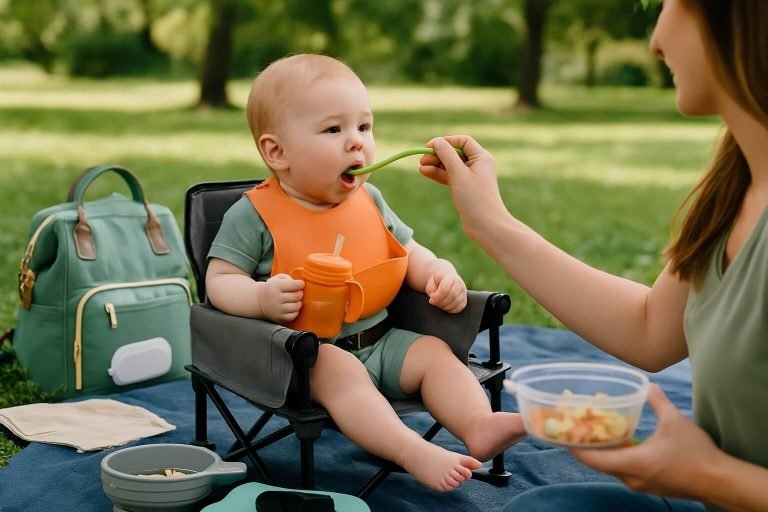
High Chairs & Boosters: Mealtime Made Secure
Mealtimes should be about nourishment and connection, not hazards.
- Stable Base: Choose a high chair with a wide, stable base to prevent tipping.
- Secure Harness: Always use the high chair’s safety harness, including the crotch strap, to prevent your child from sliding down or climbing out.
- Tray Lock: Ensure the tray locks securely into place.
- No Standing: Never allow your child to stand in the high chair.
- Supervision: Always supervise your child while they are in a high chair.
Play Yards & Activity Centers: Contained Fun, Safely
Play yards and activity centers offer a safe, contained space for your baby to play and explore.
- Check for Tears/Holes: Regularly inspect mesh sides for tears or holes that could trap fingers or create an escape route.
- Locked Position: Ensure all sides are securely locked into position when the play yard is in use.
- No Extra Padding: Avoid adding extra padding or loose blankets to the bottom of a play yard, as this can create a suffocation hazard.
- Toy Safety: Ensure any toys within the play yard are age-appropriate and do not pose choking hazards.
Strollers & Carriers: On-the-Go Safety
Whether strolling through the park or keeping your baby close in a carrier, safety features are key.
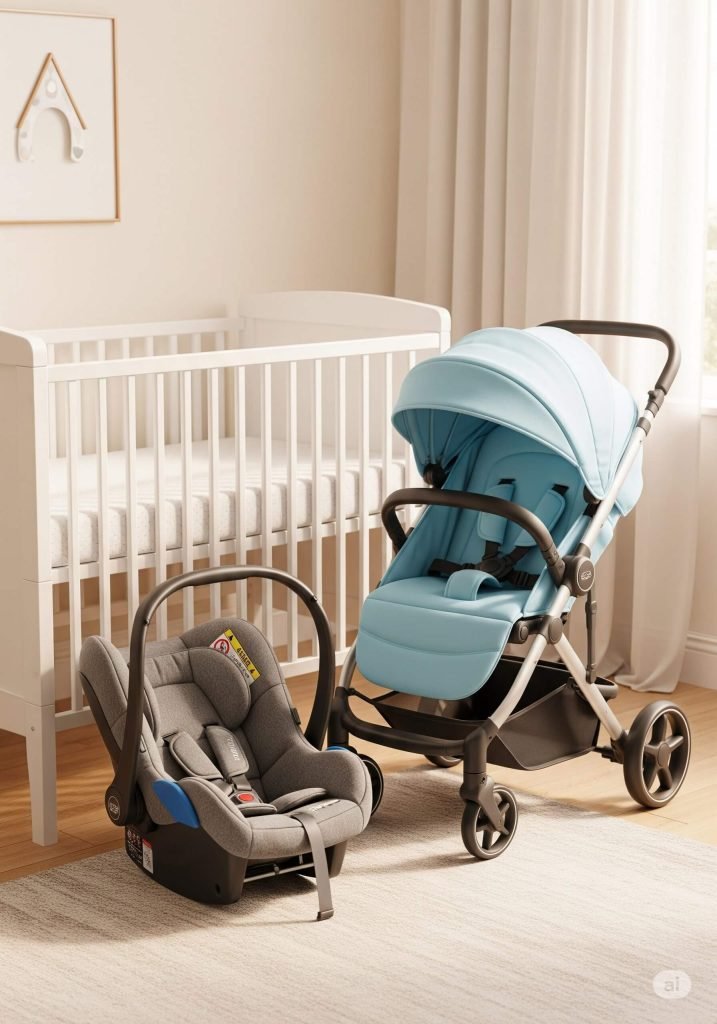
- Stroller Stability: Test the stroller’s stability. It should have a wide wheelbase and not tip easily, especially when hanging a diaper bag or other items.
- Brakes: Always engage the brakes when the stroller is stationary.
- Harness System: Use the stroller’s five-point harness system to secure your baby.
- No Overloading: Do not overload the stroller with bags or children beyond its weight limits, as this can affect stability.
- Carrier “TICKS” Rule (for slings/wraps): If using a baby sling or wrap, remember the TICKS rule:
- Tight: The sling should be tight and secure.
- In view at all times: You should always be able to see your baby’s face.
- Close enough to kiss: Your baby should be close enough that you can easily kiss their head.
- Keep chin off chest: Ensure your baby’s chin is up and away from their body to prevent airway restriction.
- Supported back: Your baby’s back should be supported in a natural position.
- Avoid Carriers for Risky Activities: Do not use baby carriers while jogging, running, biking, driving, or cooking with hot liquids.
Baby Walkers (with wheels): A Word of Caution
It’s important to note that baby walkers with wheels are not recommended by many safety organizations due to the high risk of injuries. They allow babies to move quickly into hazardous situations (stairs, hot objects, poisons) before they have developed the necessary crawling and walking skills for balance and judgment. Consider stationary activity centers or push-walkers instead.
General Safety Practices for All Baby Gear
Beyond specific items, these general tips apply to almost all baby gear:
- Follow Manufacturer Instructions: Always read and strictly follow the assembly, use, and maintenance instructions provided by the manufacturer.
- Regular Inspections: Periodically inspect all baby gear for wear and tear, loose parts, broken components, or any other signs of damage.
- Age and Weight Limits: Adhere strictly to the age, weight, and height limits specified for each product. Overusing gear beyond these limits can compromise its safety.
- Avoid Hand-Me-Downs (with caution): While hand-me-downs can save money, be very cautious with baby gear. Older items may not meet current safety standards, and their history (accidents, recalls) may be unknown. If you do accept used gear, thoroughly research its safety history and condition.
- Keep Cords Out of Reach: Be mindful of any cords on baby products (monitors, toys) and ensure they are well out of your baby’s reach to prevent strangulation.
- Childproofing Basics: Remember that baby gear is part of a larger childproofing strategy. Cover electrical outlets, secure furniture to walls, and keep hazardous items out of reach.
Conclusion
Navigating the world of baby gear can feel overwhelming, but by prioritizing safety, you’re investing in your child’s well-being and your own peace of mind. By staying informed about safety standards, checking for recalls, and diligently following manufacturer guidelines, you can create a secure and nurturing environment where your little one can thrive. Remember, vigilance and proactive safety measures are your best tools in ensuring your baby’s happy and healthy development.
FAQ: Guide to Baby Gear Safety
Q1: How often should I check for baby product recalls? A1: It’s advisable to check for baby product recalls regularly, ideally once a month, or before purchasing any new or used baby gear. You can do this by visiting government consumer product safety websites (like CPSC.gov in the US) and registering your products with the manufacturers to receive direct notifications.
Q2: Is it safe to buy used baby gear, especially cribs and car seats? A2: While some used baby gear like clothing or certain toys can be safe, it’s generally not recommended to buy used car seats or cribs. Car seats have expiration dates and their safety can be compromised after an accident, even if not visible. Cribs made before 2011 (when new crib safety standards were implemented) may have drop-side rails, which are now banned due to entanglement and strangulation risks. Always prioritize new for these critical items.
Q3: What are the biggest choking hazards for babies related to gear? A3: Common choking hazards related to baby gear include small parts that can break off toys, loose buttons or embellishments on clothing, pacifier cords or ribbons, and any item small enough to fit through a toilet paper roll. Always ensure toys and gear are age-appropriate and regularly check for loose or broken pieces.
Q4: How can I tell if a baby product meets safety standards? A4: Look for certification labels from recognized safety organizations (e.g., JPMA for Juvenile Products Manufacturers Association in North America, or CE mark in Europe). Reputable brands will usually state clearly on their packaging or website that their products meet relevant safety standards.
Q5: What’s the “Back to Sleep” recommendation, and why is it important? A5: The “Back to Sleep” recommendation means always placing your baby on their back to sleep, for naps and at night, until they are one year old. This is crucial for reducing the risk of Sudden Infant Death Syndrome (SIDS) by ensuring a clear airway and preventing suffocation on soft surfaces.